End H-1B Visa Abuse Act 2026: What Indian Professionals in the US Must Know
4 min read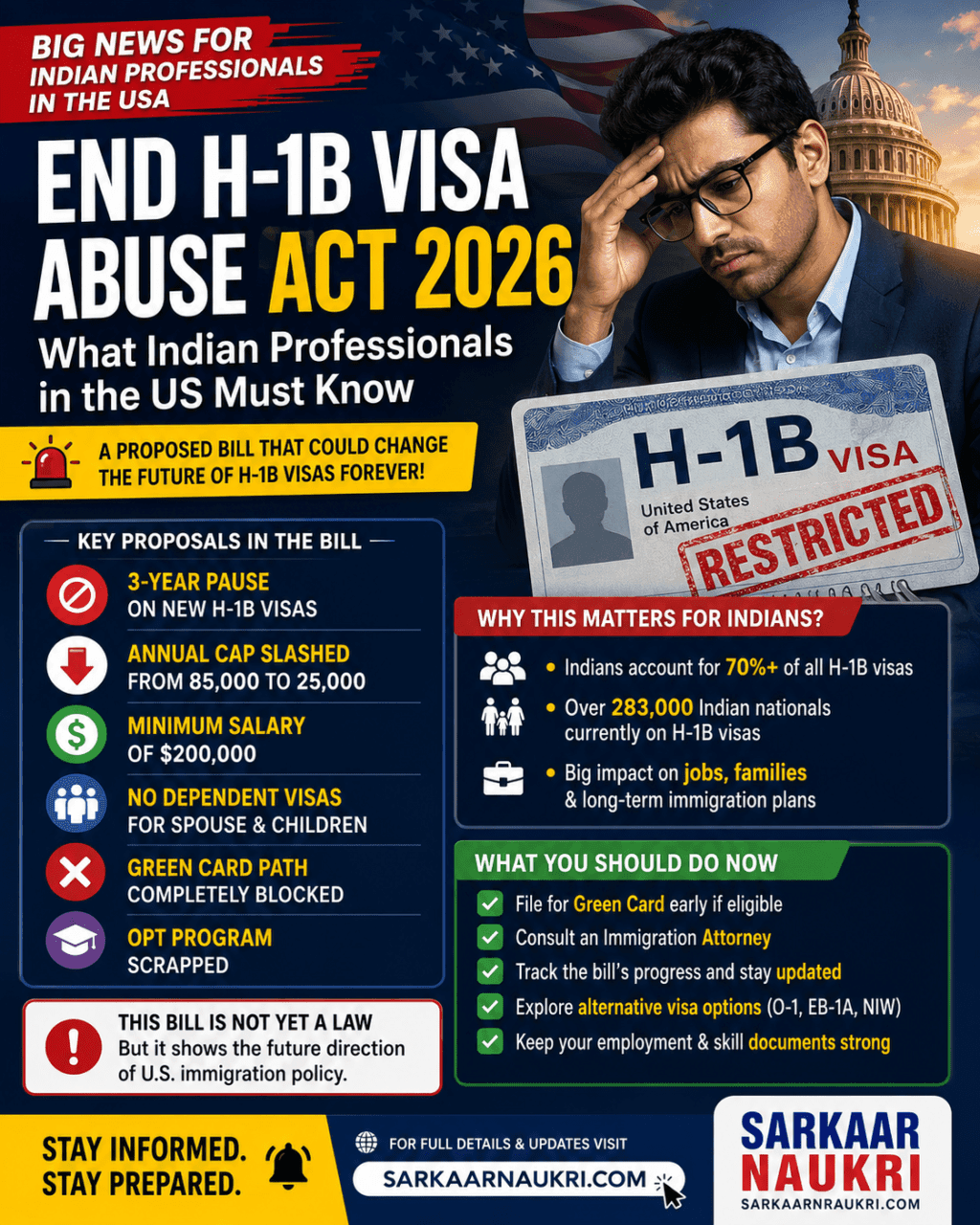
The End H-1B Visa Abuse Act 2026 has sent shockwaves through the Indian-American community. A group of eight Republican lawmakers in the U.S. Congress has introduced a bill that proposes a complete three-year pause on new H-1B visas — a move that could impact hundreds of thousands of Indian professionals currently working or planning to work in the United States.
Led by Congressman Eli Crane of Arizona, the bill is being called the strongest H-1B reform legislation ever introduced in U.S. history.
What Is the End H-1B Visa Abuse Act 2026?
The End H-1B Visa Abuse Act 2026 is a sweeping reform bill targeting the H-1B skilled worker visa programme. It was introduced by Congressman Eli Crane along with seven Republican co-sponsors — Brian Babin, Brandon Gill, Wesley Hunt, and Keith Self from Texas; Andy Ogles from Tennessee; Paul Gosar from Arizona; and Tom McClintock from California.
The bill’s supporters argue that the current H-1B system has been misused by corporations to replace American workers with cheaper foreign labor, particularly from India and China.
Key Proposals of the End H-1B Visa Abuse Act 2026
The End H-1B Visa Abuse Act 2026 goes far beyond just a temporary freeze. Here are the major proposals:
1. Three-Year Pause on New H-1B Visas
The bill calls for an immediate halt to the issuance of all new H-1B visas for three full years. During this period, no new petitions would be approved.
2. Annual Cap Slashed from 85,000 to 25,000
Once the pause ends, the annual H-1B visa cap would be drastically reduced from the current 85,000 (including 20,000 for U.S. advanced degree holders) to just 25,000.
3. Minimum Salary of $200,000
Every H-1B visa holder would be required to earn at least $200,000 per year — a major jump from the current prevailing wage requirements that vary by occupation and location.
4. Lottery System Replaced by Wage-Based Selection
The much-criticized lottery system for H-1B selection would be replaced by a wage-based model, where higher-paying jobs get priority.
5. No Dependent Visas
H-1B holders would no longer be allowed to bring their spouses and children on H-4 dependent visas — affecting tens of thousands of Indian families.
6. Green Card Path Blocked
The bill proposes prohibiting H-1B workers from transitioning to permanent residency, effectively eliminating the green card pathway that many Indian professionals have relied on for decades.
7. OPT Program Scrapped
The Optional Practical Training (OPT) program, widely used by Indian students to work in the U.S. after graduation, would also be eliminated under this bill.
How Does the End H-1B Visa Abuse Act 2026 Affect Indians?
The impact on the Indian community could be massive. Indian nationals currently account for over 70% of all approved H-1B petitions since 2015. As of now, approximately 283,397 Indian nationals hold H-1B visas, compared to around 46,680 from China.
The End H-1B Visa Abuse Act 2026 threatens to disrupt the traditional immigration journey for Indian professionals — from F-1 student visa, to OPT, to H-1B, and finally to a green card. Every single step of that path would be affected if this bill becomes law.
Major U.S. employers of H-1B workers — including Amazon, Meta, Google, and large hospital systems — depend heavily on Indian talent. The $200,000 salary floor alone would disqualify a large portion of current H-1B positions across mid-tier tech companies and healthcare providers.
For Indian families, the ban on H-4 dependent visas would mean spouses (mostly women on H-4 EAD work authorization) would lose the right to work, forcing many families into difficult financial and personal situations.
Is the End H-1B Visa Abuse Act 2026 Likely to Pass?
While the End H-1B Visa Abuse Act 2026 is grabbing headlines, immigration experts note it faces an uphill battle. Similar reform bills have been introduced in previous congressional sessions and failed to advance.
However, the current political climate — with strong anti-immigration sentiment in parts of the Republican party and the Trump administration’s ongoing crackdown on legal immigration — means the bill cannot be dismissed. Legal H-1B visa approvals have already fallen 25% as the administration tightens procedures even without new legislation.
Even if this specific bill does not pass, it signals the direction of U.S. immigration policy and could lead to smaller, incremental reforms that still significantly impact Indian professionals.
What Should Indian H-1B Holders Do Right Now?
If you are currently on an H-1B visa or planning to apply, here is what experts recommend:
- File for green card early — if you are eligible, begin the EB-2 or EB-3 process without delay.
- Consult an immigration attorney — get professional guidance specific to your employer and situation.
- Track the bill’s progress — follow updates through USCIS.gov and reliable immigration law sources.
- Explore alternative visa paths — O-1 visas, EB-1A, or National Interest Waiver (NIW) petitions may be options for highly skilled professionals.
- Keep employment documents updated — maintain strong records of your specialized skills and employer sponsorship.
Conclusion
The End H-1B Visa Abuse Act 2026 is a direct threat to the American dream of hundreds of thousands of Indian professionals. While it may not become law in its current form, it reflects a growing political movement to restrict skilled immigration into the United States.
Indian-Americans must stay informed, act early, and prepare for a shifting immigration landscape in the coming months.
About The Author