US-Iran Peace Deal Announced: Major Breakthrough in Global Diplomacy
5 min read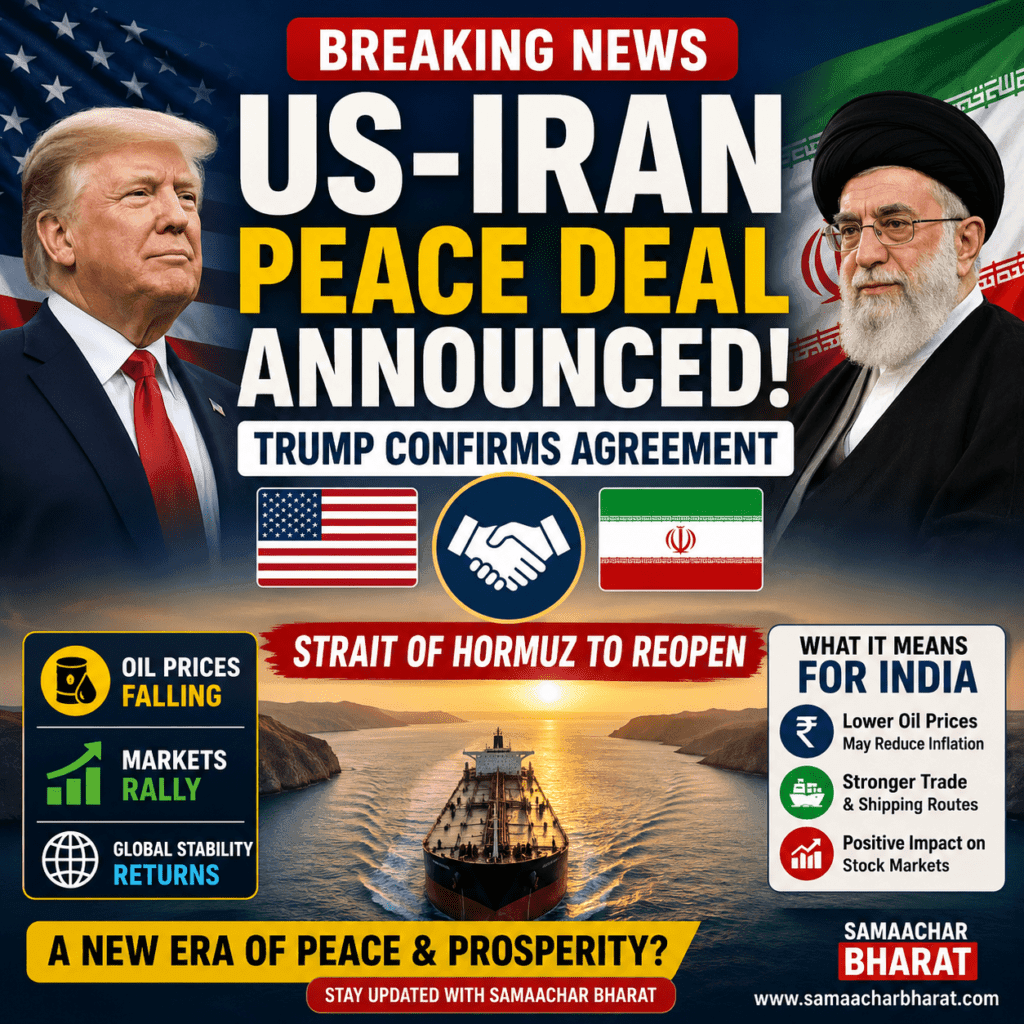
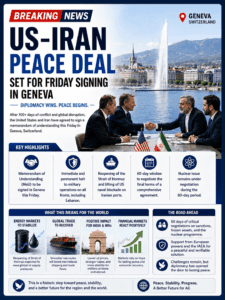
The US-Iran Peace Deal has emerged as one of the most important international developments of 2026. US President Donald Trump confirmed that Washington and Tehran have agreed to a peace framework aimed at reducing tensions, restoring stability in the Middle East, and reopening the strategically important Strait of Hormuz.
The announcement of the US-Iran peace deal has attracted global attention because the conflict between the two nations had raised concerns about energy supplies, international shipping routes, and the possibility of wider regional instability. Financial markets responded positively after reports suggested that both sides were moving toward a formal agreement.
Experts believe the US-Iran Peace Deal could become a turning point for global energy security and international trade if both countries successfully implement the terms of the agreement.
What Is Included in the US-Iran Peace Deal?
According to international reports, the Deal includes several important provisions designed to reduce tensions and improve diplomatic relations.
Key points of the agreement include:
- A framework to halt hostilities.
- Reopening of the Strait of Hormuz.
- Restoration of safe maritime navigation.
- Continued diplomatic engagement between both nations.
- Future discussions on sanctions and regional security issues.
- Negotiations regarding Iran’s nuclear program.
Although many details are still being finalized, the Deal is being viewed as a major diplomatic breakthrough after months of uncertainty and conflict.
Why the Strait of Hormuz Matters
One of the most significant aspects of the deal is the planned reopening of the Strait of Hormuz.
The Strait of Hormuz is one of the world’s most important energy corridors. A significant percentage of global crude oil and liquefied natural gas shipments pass through this narrow waterway every day.
When tensions increased in the region, shipping companies faced uncertainty, insurance costs rose, and global oil prices experienced volatility. The reopening of the route under the Deal could help restore confidence among shipping operators and energy markets worldwide.
Many economists believe stable shipping operations through the Strait of Hormuz are essential for maintaining global economic growth and controlling energy prices.
Trump Confirms Historic Agreement
President Donald Trump described the US-Iran Peace Deal as a positive step toward stability and peace in the Middle East.
According to reports, the agreement is expected to be formally signed after final diplomatic consultations. Trump emphasized that reopening key shipping routes and reducing regional tensions were among the primary objectives of the negotiations.
The announcement has generated optimism among investors, policymakers, and international organizations. Supporters argue that the US-Iran Peace Deal could reduce the risk of future conflicts and encourage economic cooperation across the region.
Oil Prices React to the US-Iran Peace Deal
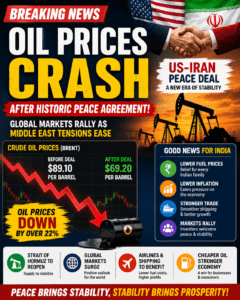
Global energy markets reacted immediately to news of the US-Iran Peace Deal.
Oil prices declined as traders anticipated fewer disruptions to energy supplies from the Gulf region. Investors interpreted the agreement as a signal that shipping operations and crude oil exports may soon return to normal levels.
Lower oil prices are often viewed positively because they can reduce transportation costs, ease inflationary pressures, and support economic growth.
Financial analysts noted that the US-Iran Peace Deal has already improved market sentiment, with investors expecting increased stability in global energy markets over the coming months.
What the US-Iran Peace Deal Means for India
The Deal could have important implications for India.
1. Lower Fuel Costs
India imports a large portion of its crude oil requirements. If oil prices remain stable or decline because of the US-Iran Peace Deal, Indian consumers and businesses could benefit from reduced energy costs.
2. Improved Trade Routes
The reopening of the Strait of Hormuz under the US-Iran Peace Deal may strengthen global shipping networks and reduce logistical challenges for importers and exporters.
3. Better Economic Stability
Lower energy costs can help reduce inflation and support economic growth. Economists believe the US-Iran Peace Deal may contribute to a more stable global business environment, which could indirectly benefit India.
4. Positive Impact on Financial Markets
Stock markets often react favorably when geopolitical tensions decrease. Investors are closely watching the implementation of the US-Iran Peace Deal to assess its long-term economic impact.
Shipping Industry Remains Cautious
Despite optimism surrounding the US-Iran Peace Deal, major shipping companies remain cautious.
Industry experts have warned that normal shipping operations may not resume immediately. Security assessments, insurance considerations, and operational adjustments are still required before full-scale maritime activity returns to pre-conflict levels.
Shipping firms are expected to monitor developments closely over the coming weeks. However, the US-Iran Peace Deal has undoubtedly improved confidence across the maritime sector.
Nuclear Issues Still Under Discussion
While the US-Iran Peace Deal addresses several immediate concerns, discussions regarding Iran’s nuclear activities continue.
Future negotiations are expected to focus on:
- Nuclear oversight measures.
- Sanctions policies.
- Regional security arrangements.
- Long-term diplomatic cooperation.
The outcome of these negotiations will play a critical role in determining whether the US-Iran Peace Deal evolves into a lasting and comprehensive settlement.
International Community Welcomes the US-Iran Peace Deal
The international community has largely welcomed the US-Iran Peace Deal.
Governments, business leaders, international organizations, and market participants have expressed hope that the agreement will contribute to greater stability across the Middle East.
Diplomatic experts believe the US-Iran Peace Deal could reduce geopolitical uncertainty and encourage broader cooperation among regional powers. Many countries are expected to support further negotiations aimed at maintaining peace and strengthening economic ties.
Conclusion
The US-Iran Peace Deal represents a significant diplomatic achievement with the potential to reshape global energy markets, international trade routes, and regional security dynamics.
By reopening the Strait of Hormuz, reducing tensions, and encouraging dialogue, the US-Iran Peace Deal could provide economic benefits for countries around the world, including India. Lower oil prices, improved trade flows, and stronger market confidence are among the immediate advantages being discussed by experts.
Although challenges remain, particularly regarding nuclear negotiations and long-term implementation, the US-Iran Peace Deal has already become one of the most important international stories of 2026 and will continue to be closely watched by governments, businesses, and investors worldwide.
About The Author