Oil Prices Crash After Historic Peace Agreement: Global Markets Rally as Middle East Tensions Ease
4 min read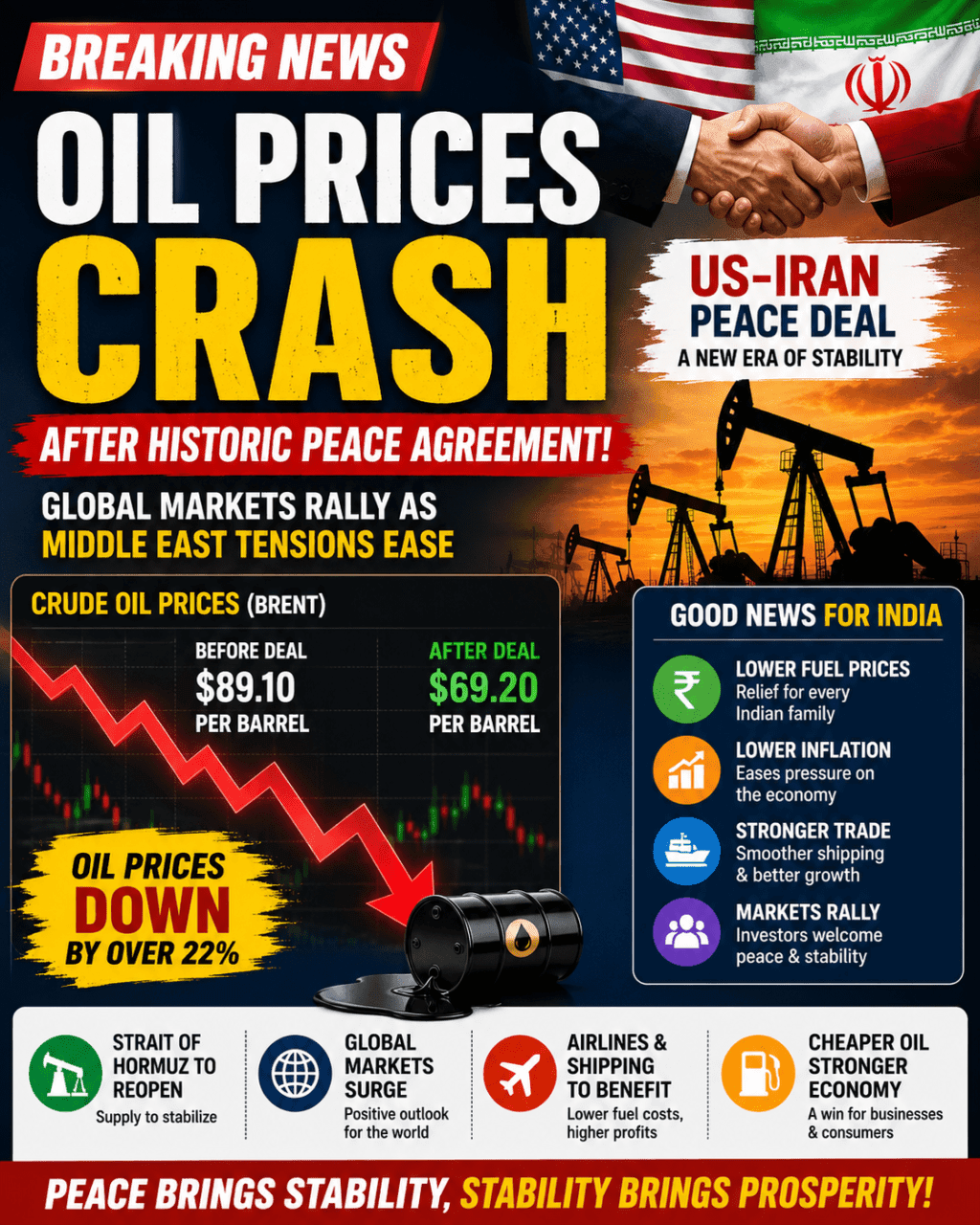
The phrase Oil Prices Crash dominated global financial headlines after the announcement of a historic peace agreement between the United States and Iran. Investors welcomed the breakthrough, sending oil prices sharply lower as fears of supply disruptions in the Middle East eased.
The development marks one of the most significant geopolitical events of 2026. Analysts believe the reopening of the Strait of Hormuz and reduced regional tensions could help stabilize energy markets and improve global economic confidence.
Why Did Oil Prices Crash?
The main reason Oil Prices Crash became a global trend is the peace agreement’s impact on energy supply expectations.
For months, tensions between the United States and Iran had raised concerns about potential disruptions to shipping routes in the Persian Gulf. Traders feared reduced crude oil exports, leading to higher energy prices worldwide.
However, the peace agreement has changed market expectations dramatically. Investors now anticipate smoother oil shipments and improved supply stability, resulting in a sharp decline in crude oil prices.
Strait of Hormuz Reopening Brings Relief
One of the biggest factors behind the Oil Prices Crash story is the planned reopening of the Strait of Hormuz.
The Strait of Hormuz is among the world’s most important oil transportation routes. A substantial portion of global oil exports passes through this narrow waterway every day.
Any disruption in the region immediately affects global fuel prices. With the peace agreement paving the way for normal shipping operations, traders expect oil supplies to flow more efficiently, reducing pressure on energy markets.
Global Stock Markets Rally
As Oil Prices Crash, stock markets across the world have responded positively.
Investors generally view lower energy costs as beneficial for economic growth. Reduced fuel expenses can lower transportation costs, improve corporate profitability, and help control inflation.
Major stock indices recorded gains as traders interpreted the peace agreement as a sign of improving global stability. Financial experts believe reduced geopolitical risk could support market growth in the coming months.
How India Could Benefit
The oil prices crash story is particularly important for India.
Lower Fuel Prices
India imports a significant amount of crude oil. When global oil prices decline, the country can potentially reduce fuel import costs.
This could eventually support lower petrol and diesel prices, depending on market conditions and government policies.
Reduced Inflation
Energy prices affect almost every sector of the economy. Transportation, manufacturing, agriculture, and logistics all depend on fuel.
As oil prices crash, inflationary pressures may ease, providing relief to consumers and businesses alike.
Stronger Economic Growth
Lower energy costs can improve business profitability and increase consumer spending power. Economists suggest that stable oil prices may help support India’s growth outlook.
Airlines and Shipping Companies Gain
One major winner from the oil price crash trend is the transportation sector.
Airlines spend a large portion of their operating budgets on fuel. Lower oil prices can significantly reduce operating expenses and improve profitability.
Shipping companies may also benefit from reduced fuel costs and improved maritime security as regional tensions decline.
Energy Markets Remain Cautious
Despite the optimism surrounding the oil prices crash headlines, experts warn that uncertainty has not completely disappeared.
The peace agreement still requires successful implementation, and several diplomatic issues remain unresolved. Future negotiations involving sanctions, regional security, and nuclear oversight will continue to influence market sentiment.
As a result, energy traders are likely to remain cautious while monitoring developments closely.
What Experts Are Saying
Market analysts believe the oil prices crash reaction reflects growing confidence that major supply disruptions are becoming less likely.
Many experts expect oil prices to remain under pressure if diplomatic progress continues and shipping operations through the Strait of Hormuz return to normal levels.
However, they also caution that unexpected geopolitical developments could still cause volatility in energy markets.
Impact on the Global Economy
The oil prices crash event may have broader implications beyond energy markets.
Lower oil prices can:
- Reduce transportation costs.
- Lower manufacturing expenses.
- Improve consumer purchasing power.
- Help central banks manage inflation.
- Support global economic growth.
These benefits explain why investors welcomed the peace agreement and responded positively across multiple financial markets.
Conclusion
The oil prices crash story highlights the powerful connection between geopolitics and global energy markets. The historic peace agreement between the United States and Iran has significantly reduced concerns about oil supply disruptions and encouraged optimism among investors.
For India, lower oil prices could translate into reduced fuel costs, lower inflation, and stronger economic growth. While challenges remain, the current market reaction suggests that businesses, consumers, and investors are hopeful that the region is moving toward greater stability.
If the peace agreement is fully implemented and the Strait of Hormuz reopens without further disruptions, the oil price crash trend could become one of the most important economic stories of 2026.
About The Author