7 Key Revelations in General Naravane Book Controversy 2026 | Four Stars of Destiny Explained
4 min read
General Naravane book controversy: Why Four Stars of Destiny Has Triggered a National Storm
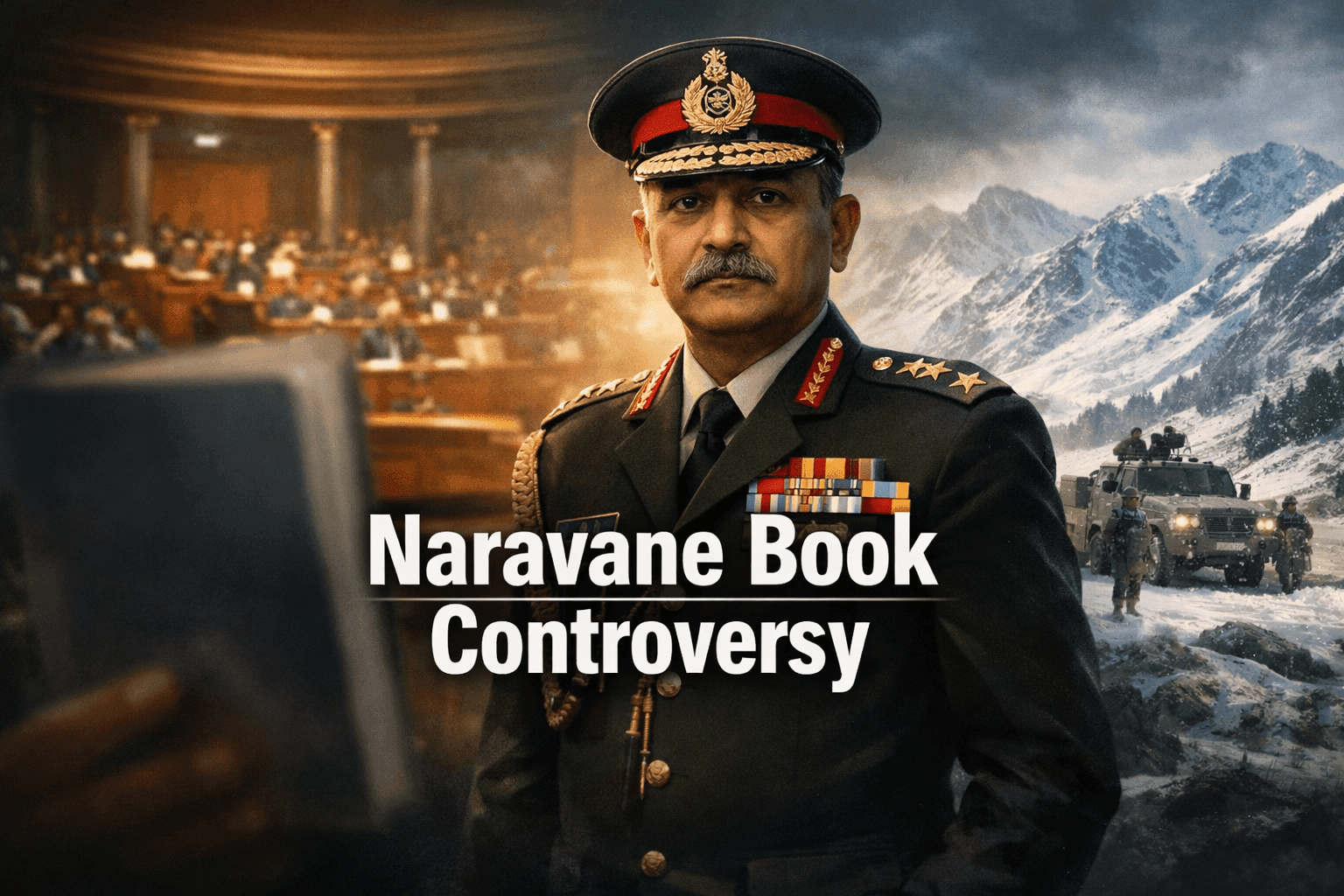
General Naravane book controversy has emerged as one of India’s most serious civil–military debates in recent years, intersecting national security policy, parliamentary privilege, and freedom of expression. The unpublished memoir Four Stars of Destiny—authored by former Army Chief Manoj Mukund Naravane—has moved far beyond a literary dispute and now sits at the center of a police investigation, political confrontation, and Ministry of Defence clearance impasse.
Unlike routine political controversies, this episode directly involves India’s military command structure, confidential operational history, and the legal framework governing retired officers’ publications.
General Naravane book and the unpublished memoir Four Stars of Destiny
General Naravane book Four Stars of Destiny is a career memoir covering nearly four decades of military service, including Naravane’s tenure as Chief of Army Staff between December 2019 and April 2022. According to multiple media summaries, the manuscript discusses strategic decision-making during the 2020 eastern Ladakh standoff, internal military deliberations, and policy disagreements over the Agnipath recruitment model.
What makes this memoir distinct is not its subject—but its status. Despite being contracted by Penguin Random House India, the book has never received final government clearance, a mandatory requirement under existing defence publication rules for retired senior officers.
Between 2020 and 2024, the Ministry of Defence reportedly cleared 35 similar manuscripts. Four Stars of Destiny remains the only one still pending, elevating concerns about selective scrutiny or exceptional sensitivity.
Why General Naravane book clearance is mandatory under defence rules
India follows a three-tier military publication clearance system:
- Army Headquarters review for operational sensitivity
- Ministry of Defence vetting for strategic and diplomatic impact
- Final clearance before publication or distribution
These rules exist to prevent disclosure of troop movements, command decisions, intelligence methods, or diplomatic back-channel discussions that could affect national security.
Officials familiar with the process argue that memoirs referencing live borders—particularly India-China military engagements—are subjected to far higher scrutiny than historical war accounts.
Parliamentary disruption: How the issue entered the Lok Sabha
The controversy escalated on February 2, 2026, when Rahul Gandhi referred to excerpts from the unpublished memoir during a debate in the Lok Sabha.
The government objected strongly, with ministers arguing that citing an unpublished and unauthorized manuscript violated parliamentary norms. Speaker Om Birla cited procedural rules restricting references to material not officially placed before the House, leading to repeated adjournments and disciplinary action against opposition members.
The episode transformed a publication delay into a constitutional and procedural confrontation.
Penguin Random House India and the question of “publication”
Amid political confusion, Penguin Random House India issued a formal clarification stating that:
- The book was never officially published
- Pre-order listings do not constitute publication
- Any circulating physical or digital copies are unauthorized
The publisher emphasized that a book is considered published only when it is legally available across retail channels, not when promotional pages or advance listings appear online.
This clarification became central to determining whether Parliament was discussing leaked material.
Delhi Police FIR and the investigation into leaked copies
On February 9, 2026, the Delhi Police registered an FIR to investigate how typeset PDFs and alleged print copies of Four Stars of Destiny entered circulation.
The probe focuses on:
- Possible data breaches during manuscript handling
- Unauthorized digital uploads
- Alleged short-term bookstore availability in Delhi
Law enforcement officials have indicated that copyright violations and potential breaches of official secrets laws are both under examination.
What the leaked excerpts reportedly reveal
Media reports claim the manuscript references:
- Late-night crisis calls during Chinese troop movements
- Ambiguous political directives during operational decisions
- Internal resistance to elements of the Agnipath recruitment scheme
One widely reported passage describes a senior political authority telling the Army Chief to exercise discretion during a volatile moment—raising questions about civilian command responsibility during active military standoffs.
While these excerpts remain unofficial, their circulation has intensified demands for transparency.
Broader implications: Civil–military balance and democratic oversight
The General Naravane book controversy has reignited debate on three core issues:
- How much operational detail can retired officers reveal?
- Can Parliament rely on leaked or unpublished material?
- Does excessive secrecy weaken democratic accountability?
Security experts argue that unchecked disclosures risk diplomatic fallout, while transparency advocates warn that indefinite suppression undermines public trust.
Current status and what happens next
As of February 11, 2026:
- Four Stars of Destiny remains unpublished
- Online listings have been withdrawn
- Police investigation is ongoing
- Ministry of Defence clearance remains undecided
Until clearance is granted—or formally denied—the memoir exists in a legal and political grey zone.
Please do check other content on samaachar bharat
About The Author