African Currencies Under Pressure as Middle East Tensions Shake Global Markets
4 min readBy Samaachaar Bharat | International News
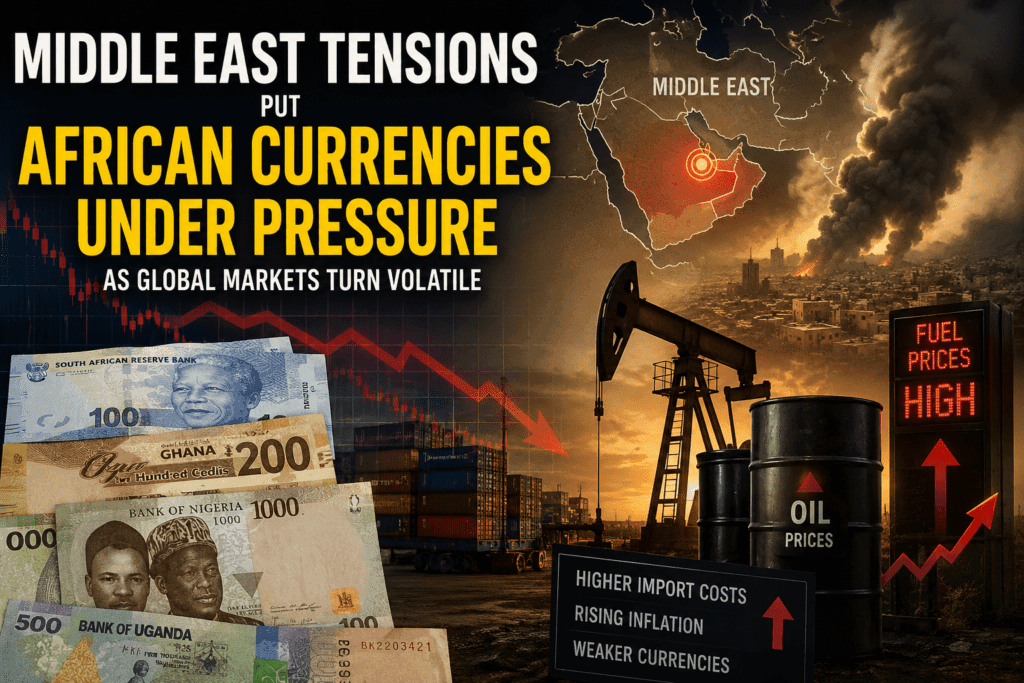
Escalating geopolitical tensions in the Middle East are sending shockwaves through global financial markets, placing African currencies under growing pressure. While the conflict is centered in one region, its economic impact is being felt across several African nations through higher energy prices, volatile exchange rates, and rising import costs. Economists believe that if uncertainty continues, African currencies could face additional challenges in the months ahead.
Why African Currencies Are Facing Fresh Pressure
The recent surge in global uncertainty has strengthened the U.S. dollar, making it more expensive for many countries to purchase imported goods. Since most international trade is conducted in dollars, African currencies have weakened against the greenback in several economies.
Many African nations depend on imports for petroleum products, machinery, medicines, fertilizers, and industrial equipment. As the cost of these imports rises, governments and businesses need more foreign currency to pay international suppliers. This growing demand for dollars has placed further pressure on African currencies, increasing financial uncertainty.
Financial analysts say that exchange rate movements are often influenced by investor confidence. During periods of geopolitical tension, investors usually shift their money toward safer assets, reducing demand for emerging market currencies. As a result, African currencies often experience greater volatility.
Rising Oil Prices Increase Economic Burden
One of the immediate consequences of conflict in the Middle East is the increase in global crude oil prices. Concerns about supply disruptions frequently push energy prices higher, affecting countries that rely heavily on imported fuel.
Higher fuel costs increase transportation expenses, electricity generation costs, manufacturing expenses, and logistics charges. This chain reaction places additional pressure on businesses and governments while weakening African currencies in import-dependent economies.
Several industries, including agriculture, manufacturing, construction, and logistics, may also experience rising operational costs due to expensive fuel and imported raw materials.
Inflation Could Become a Major Concern
When African currencies lose value, imported products become more expensive. This directly affects the prices of fuel, medicines, electronic goods, fertilizers, cooking oil, and industrial machinery.
Businesses facing higher import costs often increase prices to protect their profit margins. Consequently, consumers pay more for essential goods and services, reducing household purchasing power.
Food prices may also rise as farmers spend more on fuel, transportation, seeds, fertilizers, and agricultural equipment. Inflation can therefore spread across multiple sectors of the economy, making economic recovery more difficult.
Central Banks Closely Monitoring African Currencies
Financial authorities across the continent are carefully monitoring African currencies as exchange rate volatility continues. Central banks may introduce policy measures to stabilize markets if excessive currency fluctuations threaten economic stability.
Possible measures include strengthening foreign exchange reserves, adjusting interest rates, encouraging export earnings, and improving investor confidence through sound fiscal policies.
Although such measures cannot eliminate external risks completely, they can reduce the impact of sudden market movements on African currencies.
Export-Oriented Economies May Perform Better
Not every country faces the same level of risk. Nations that export minerals, metals, agricultural commodities, or energy products may benefit from stronger global commodity prices.
Higher export earnings generate additional foreign exchange, helping support African currencies and improving overall economic resilience. These countries may be better positioned to absorb external shocks than economies heavily dependent on imports.
However, countries with large trade deficits and limited foreign exchange reserves may continue facing pressure if oil prices remain elevated.
Investors Watching Global Developments
International investors are closely monitoring developments in the Middle East before making major investment decisions. Political uncertainty often leads to cautious investment behavior, particularly in emerging markets.
Lower capital inflows can place additional strain on African currencies, especially where foreign investment plays a significant role in economic development.
Financial experts believe investor confidence will remain a key factor influencing currency markets until geopolitical tensions begin to ease.
Long-Term Reforms Could Strengthen African Currencies
Economists argue that the current situation highlights the importance of reducing dependence on imports and expanding domestic production. Investments in manufacturing, renewable energy, agriculture, and infrastructure could improve long-term economic resilience.
Diversifying export markets and strengthening regional trade partnerships may also help stabilize African currencies by reducing exposure to external shocks.
Recent reports published by the African Development Bank & World Bank have highlighted the importance of strengthening foreign exchange reserves.
Greater economic cooperation among African nations could improve trade within the continent while reducing reliance on costly imports from distant markets.
Outlook Remains Uncertain
The future performance of African currencies will depend largely on global geopolitical developments, energy prices, and investor sentiment. If tensions in the Middle East ease, commodity prices could stabilize and financial markets may gradually recover.
Until then, governments, businesses, and consumers are expected to remain cautious as they prepare for continued market uncertainty. Building stronger domestic economies, maintaining healthy foreign exchange reserves, and implementing sound economic policies will remain essential for protecting African currencies against future global disruptions.
As international markets continue responding to geopolitical events, African currencies will remain an important indicator of the continent’s economic resilience and financial stability. According to the International Monetary Fund (IMF), currency stability remains an important factor in maintaining sustainable economic growth.
About The Author