Bangladesh Election 2026: Opposition Secures Majority in Landmark Democratic Shift
4 min read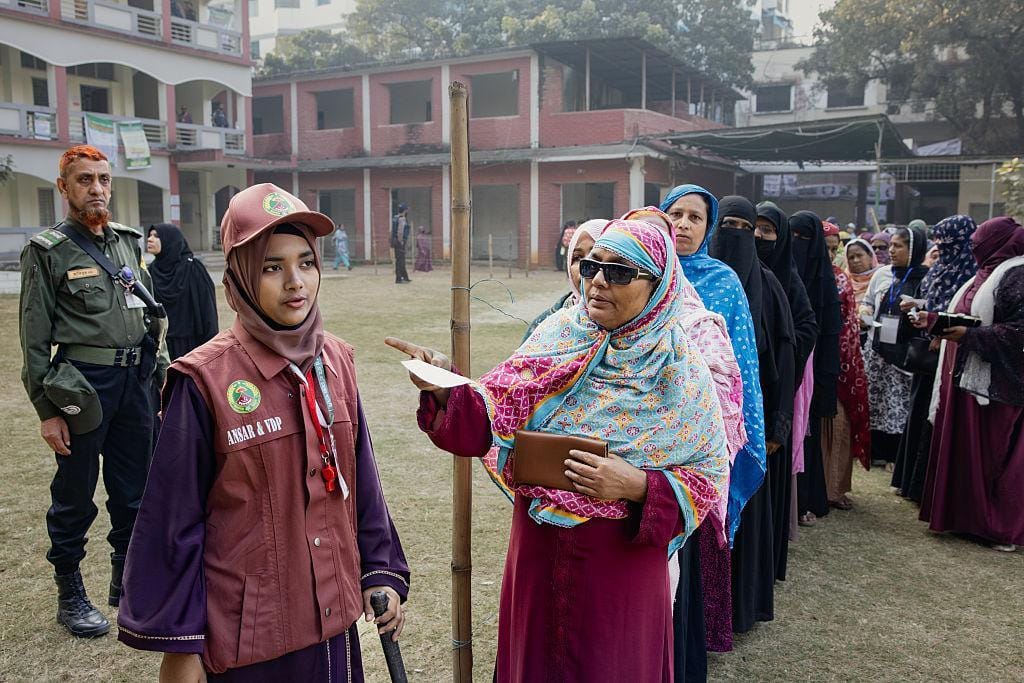
The Bangladesh Election 2026 has resulted in a decisive parliamentary shift, with the opposition coalition securing a clear majority in the Jatiya Sangsad. The outcome marks one of the most consequential political transitions in the country’s recent history and signals a strong voter mandate for economic stabilization, institutional reform, and administrative accountability.
Official provisional figures released by the Bangladesh Election Commission confirm that the opposition crossed the majority threshold comfortably, ending more than a decade of dominant leadership by the incumbent party. Voter turnout exceeded 74 percent, reflecting high public engagement and the significance of this electoral cycle.
Political analysts describe Bangladesh Election 2026 not merely as a change in leadership, but as a structural recalibration of governance priorities.
Bangladesh Election 2026 Results and Parliamentary Breakdown
Preliminary data indicates that the opposition coalition secured over 160 seats in the 300-member parliament, while the incumbent party retained slightly above 110 seats. Regional alliances and independent candidates accounted for the remaining constituencies.
Urban districts played a decisive role in shaping the results. Constituencies in Dhaka and Chittagong reflected stronger support for change, particularly among middle-class and youth voters. Rural areas showed a more mixed pattern but still contributed to the overall parliamentary majority achieved by the opposition bloc.
Observers note that Bangladesh Election 2026 demonstrated a relatively smooth administrative process, with no major systemic disruptions reported during counting or result tabulation.
Economic Pressures That Influenced Voter Sentiment
Economic factors were central to voter decision-making in Bangladesh Election 2026.
Over the past two years, Bangladesh faced mounting economic pressure stemming from:
- Inflation affecting essential commodities
- Energy price volatility
- Strain on foreign currency reserves
- Export competitiveness challenges in garment manufacturing
Although macroeconomic indicators showed resilience compared to several regional economies, household-level financial stress increased. Rising food prices and employment insecurity became key electoral issues.
The opposition capitalized on these concerns by presenting a reform-oriented economic framework that emphasized fiscal discipline, investment facilitation, and targeted employment initiatives. Analysts believe this economic messaging significantly influenced undecided voters.
Governance and Institutional Reform After Bangladesh Election 2026
Beyond economic management, governance reform became a defining theme of the national vote.
Civil society organizations, policy experts, and youth groups called for stronger institutional safeguards and greater transparency in public administration. In response, opposition leaders pledged to:
- Strengthen anti-corruption oversight mechanisms
- Improve public procurement transparency
- Reinforce judicial independence
- Enhance parliamentary oversight
Bangladesh Election 2026 thus reflected broader public expectations for institutional modernization rather than solely partisan competition.
Political commentators stress that implementation capacity will determine whether reform promises translate into measurable outcomes.
International Response to Bangladesh Election 2026
The outcome of Bangladesh Election 2026 drew swift reactions from global stakeholders.
Multilateral institutions welcomed the peaceful conduct of the election process. Western governments emphasized the importance of democratic continuity and institutional stability. Regional powers signaled readiness to continue economic cooperation and trade engagement.
Bangladesh’s strategic geographic position in South Asia and its role in maritime trade corridors amplify the international relevance of the election outcome. Diplomatic recalibration may occur depending on the policy direction adopted by the incoming administration.
Analysts suggest that foreign policy continuity is likely, though economic priorities could shape new partnership frameworks.
Market Reaction and Investment Outlook
Financial markets responded with cautious optimism following confirmation of the parliamentary shift.
Investors are closely monitoring:
- Fiscal policy announcements
- Currency management strategies
- Infrastructure development priorities
- Trade diversification plans
Bangladesh’s export-driven economy, particularly its garment sector, remains critical to economic stability. In addition, digital services and renewable energy sectors are expected to receive increased policy attention under the new administration. The United Nations emphasized the importance of democratic continuity…
If macroeconomic stabilization measures are implemented effectively, Bangladesh Election 2026 could reinforce investor confidence in the medium term.
Key Challenges Facing the New Government
Despite the decisive mandate, structural challenges remain significant.
Immediate priorities include:
- Managing inflationary pressure
- Strengthening fiscal sustainability
- Expanding employment opportunities
- Enhancing export diversification
- Ensuring administrative efficiency
Public expectations following Bangladesh Election 2026 are high. The first 100 days of governance will likely shape long-term political stability and economic credibility.
Policy sequencing and execution speed will be critical in maintaining public confidence.
Regional and Geopolitical Implications
Bangladesh plays an increasingly important role within South Asia and the broader Indo-Pacific region.
The electoral transition may influence:
- Cross-border energy cooperation
- Maritime security coordination
- Infrastructure connectivity initiatives
- Regional trade negotiations
A stable and reform-focused administration strengthens Bangladesh’s position in multilateral forums and enhances its leverage in regional economic diplomacy.
Bangladesh Election 2026 therefore holds implications beyond domestic politics, extending into strategic regional calculations.
Public Sentiment and Democratic Expectations
Across major urban centers, supporters celebrated the parliamentary shift as a renewal of democratic accountability. At the same time, many citizens emphasized the need for national unity and institutional continuity.
Political analysts warn that maintaining stability requires inclusive governance and constructive engagement between ruling and opposition factions.
Bangladesh Election 2026 has elevated public expectations significantly. Citizens expect visible improvements in economic management and governance transparency within the near term.
Frequently Asked Questions
Who won Bangladesh Election 2026?
The opposition coalition secured a parliamentary majority in the national legislature.
Why was Bangladesh Election 2026 significant?
It marked a major political transition driven by economic and governance concerns.
Will foreign policy change after the election?
Most observers expect continuity, though economic partnerships may be recalibrated.
What are the immediate priorities for the new government?
Inflation control, employment generation, and institutional reform are key priorities.
Read more global political updates in our International section.
About The Author