India Digital Public Infrastructure : 7 Key Ways AI and Cloud Are Transforming Governance
4 min read
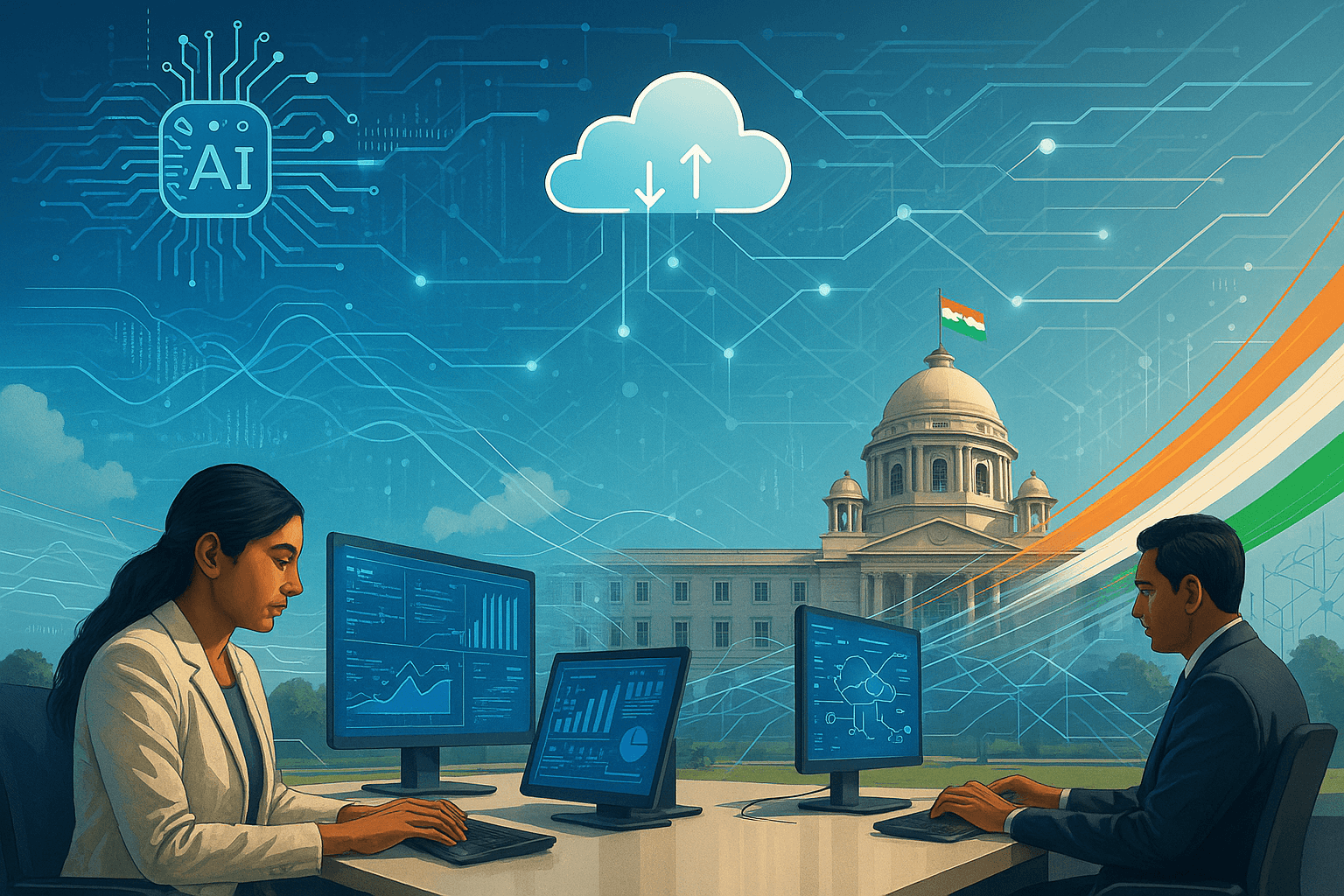
India Digital Public Infrastructure is entering a decisive phase of transformation as the government deepens the integration of artificial intelligence, cloud computing, and data-driven governance across public systems. What began as an effort to digitise citizen services has now evolved into a strategic framework aimed at efficiency, scalability, and intelligent policymaking.
Over the last decade, platforms such as Aadhaar, Unified Payments Interface (UPI), DigiLocker, and CoWIN have laid the foundation for India’s digital governance ecosystem. These platforms are now being strengthened with advanced technologies to handle larger volumes, improve accuracy, and deliver faster outcomes for citizens.
India Digital Public Infrastructure Moves From Digitisation to Intelligence
India Digital Public Infrastructure is no longer limited to providing online access to services. The current focus is on embedding intelligence into systems so that governance becomes predictive rather than reactive. Artificial intelligence tools are increasingly being deployed to analyse administrative data, identify inefficiencies, and support informed decision-making.
Government departments are using AI-powered dashboards to track real-time performance indicators in sectors such as healthcare, welfare delivery, and urban management. These tools help administrators detect delays, allocate resources efficiently, and respond proactively to emerging issues.
According to initiatives outlined by the Ministry of Electronics and Information Technology, digital public platforms are being upgraded to support AI-driven governance and cloud scalability.
AI Use in Grievance Redressal and Welfare Schemes
One of the most practical applications of AI within digital public systems is grievance redressal. Machine learning models are being used to automatically categorise complaints, identify urgency, and route them to the appropriate departments. States that have piloted these systems report improved resolution timelines and higher citizen satisfaction.
In welfare delivery, AI-enabled verification mechanisms help reduce duplication and leakage by cross-referencing beneficiary databases. Officials say this ensures that subsidies and benefits reach the intended recipients more efficiently while improving transparency and accountability.
Cloud Infrastructure Strengthens Public Digital Platforms
Cloud computing has become the backbone supporting the expansion of India Digital Public Infrastructure. Legacy government systems are being migrated to secure cloud environments to ensure reliability, scalability, and data resilience.
This shift allows public platforms to manage sudden traffic surges without service disruptions. High-demand events such as tax filing deadlines, examination result announcements, and large-scale benefit transfers now require systems capable of operating at scale, which cloud infrastructure enables.
Cybersecurity and Data Protection Take Centre Stage
As public systems rely more heavily on cloud and AI technologies, cybersecurity and data protection have emerged as critical priorities. Authorities have emphasised the need for strong encryption standards, continuous system monitoring, and restricted data access protocols.
Maintaining public trust is essential for the long-term success of digital governance. Policymakers have reiterated that citizen data must be used responsibly, with safeguards in place to prevent misuse or breaches.
Global Recognition of India’s Digital Governance Model
India Digital Public Infrastructure has drawn increasing attention from other countries seeking scalable and inclusive digital governance solutions. International organisations and governments are studying India’s open, interoperable platform approach as a model for digital transformation.
UPI, which processes billions of transactions every month, is often highlighted as a global benchmark. Its success demonstrates how public digital rails can encourage private innovation while maintaining regulatory oversight. Fintech companies, startups, and banks continue to build products on top of these systems, expanding financial inclusion.
Technology experts note that the modular design of India’s digital platforms allows continuous upgrades without disrupting existing services. This flexibility is particularly valuable in a rapidly evolving technological landscape.
Challenges in Scaling Advanced Technologies Nationwide
Despite rapid progress, scaling advanced technologies across a diverse country like India presents challenges. Infrastructure gaps in rural regions, varying levels of digital literacy, and shortages of skilled personnel remain areas of concern.
There is also an ongoing debate around ethical AI use. Experts warn that algorithmic bias and lack of transparency could undermine trust if not addressed proactively. Ensuring accountability and fairness in automated decision-making systems is becoming increasingly important.
Building Talent and Institutional Capacity
To support the next phase of growth, the government is investing in capacity-building initiatives focused on artificial intelligence, data science, and cybersecurity. Partnerships with academic institutions and industry players are expected to strengthen domestic expertise.
Officials believe that developing homegrown talent will reduce reliance on external technology providers and position India as a leader in digital governance and innovation.
Future Outlook for India’s Digital Ecosystem
Looking ahead, India Digital Public Infrastructure is expected to evolve toward deeper interdepartmental integration, greater use of predictive analytics, and enhanced citizen participation through digital platforms.
Analysts suggest that sustained investment, regulatory clarity, and strong governance frameworks will determine how effectively India can leverage technology for inclusive growth. If implemented carefully, the combination of AI and cloud computing could fundamentally reshape public service delivery in the coming years.
India’s expanding digital governance framework is part of a broader technology transformation currently shaping the country’s public and private sectors, as covered extensively in Samaachar Bharat’s technology section.
About The Author