Parliament Disruptions: 7 Explosive Scenes That Brought Lok Sabha & Rajya Sabha to a Standstill
3 min read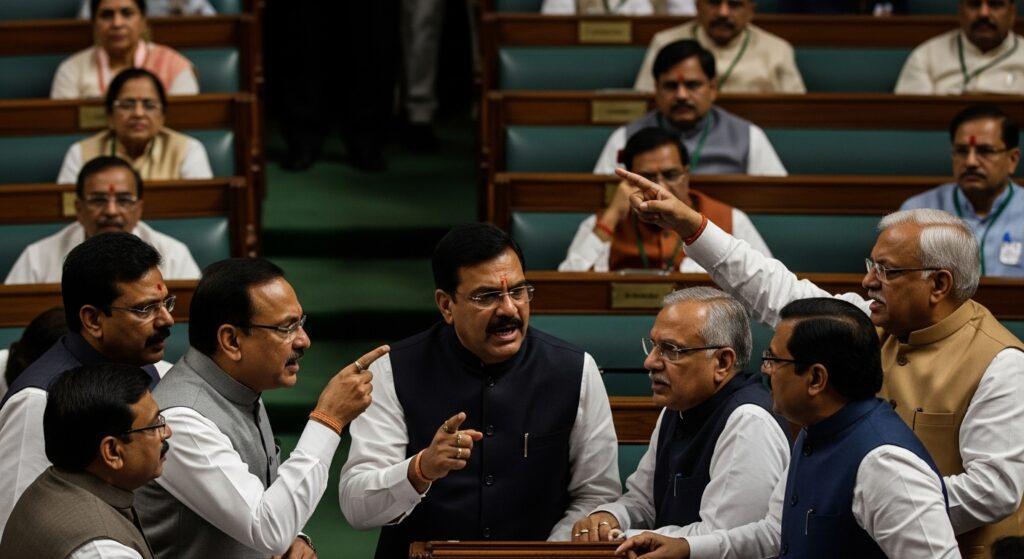
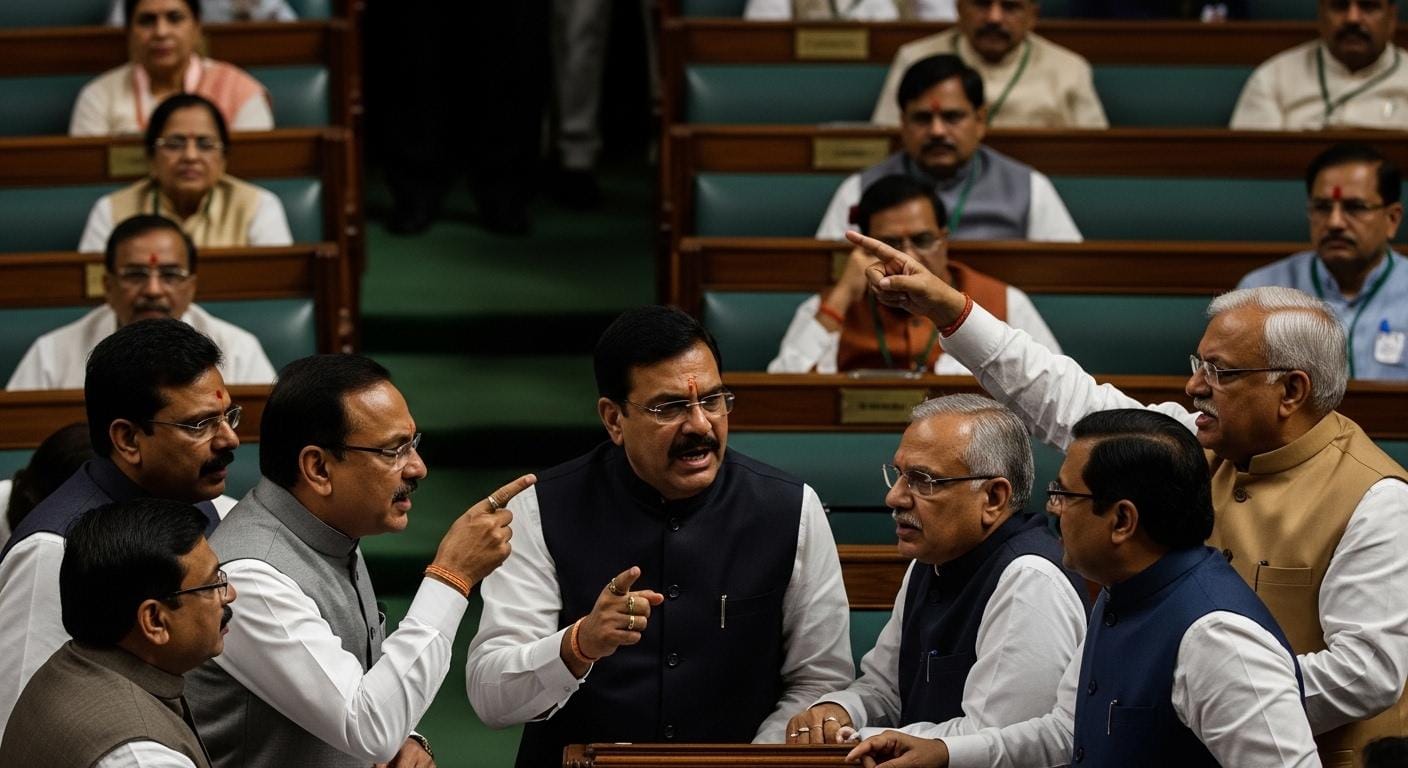
Parliament disruptions brought legislative work to a grinding halt today as repeated adjournments, shouting matches, and walkouts paralyzed proceedings in both houses. What began as routine business quickly escalated into one of the most chaotic days of the ongoing session, raising fresh questions about political dialogue, accountability, and governance.
Within minutes of the session beginning, opposition MPs were on their feet demanding immediate discussions on sensitive national and international issues. The ruling benches pushed back, accusing the opposition of deliberately disrupting proceedings to avoid debate on legislative business. The clash set the tone for the rest of the day.
Despite multiple appeals from the presiding officers to maintain order, the House descended into disorder, forcing repeated suspensions.
Chaos Erupts as Question Hour Collapses
The first casualty of the day’s Parliament disruptions was Question Hour—a crucial mechanism through which lawmakers hold the government accountable. Shouting and slogans drowned out proceedings, making it impossible for ministers to respond to questions.
The Speaker urged members to return to their seats and allow the House to function, warning that continued disruptions would only hurt public interest. Those appeals went largely ignored.
Within minutes, the Lok Sabha was adjourned over the topic of the Epstein files
Similar scenes soon unfolded in the Rajya Sabha, where opposition members raised parallel demands, leading to another adjournment.
7 Moments That Defined Today’s Parliament Disruptions
1. Protests Begin Before Business Starts
Even before scheduled discussions could begin, protests erupted, signaling a coordinated show of resistance.
2. Slogans and Placards Inside the House
Despite clear parliamentary rules, placards were displayed and slogans raised, escalating tensions.
3. Speaker’s Repeated Appeals Ignored
Multiple calls for calm failed as disruptions intensified.
4. Opposition Walkouts
Sections of opposition parties staged walkouts, accusing the government of avoiding debate.
5. Government Pushback
Treasury benches accused opposition MPs of deliberately stalling proceedings to create political pressure.
6. Multiple Adjournments
Several sittings lasted only a few minutes before being suspended again.
7. Legislative Agenda Deferred
Key bills, statements, and discussions were postponed due to the continued stalemate.
Why Parliament Disruptions Matter Beyond Politics
These Parliament disruptions are not just political drama — they carry real consequences. Every adjourned session delays discussions on laws that affect employment, prices, welfare schemes, and national policy.
When Parliament cannot function, decisions shift away from the House floor to closed-door meetings, reducing transparency. Experts warn that repeated disruptions weaken parliamentary traditions and erode public confidence in democratic institutions.
For citizens watching from outside, the optics are troubling: rising national challenges on one hand, and a stalled legislature on the other.
Public Cost of a Stalled Parliament
The Cost of a Stalled Parliament
Every day of Parliament involves significant public expenditure — from staff and security to infrastructure and broadcasting. When sessions end with little or no productive output, questions inevitably arise about accountability and value for money.
Former parliamentary officials have repeatedly warned that while protest is an essential part of democracy, sustained disruption undermines the institution itself. They argue that dissent is most effective when voiced through debate rather than disorder.
Can Normalcy Be Restored?
Behind the scenes, parliamentary affairs officials are attempting to broker dialogue between party leaders to restore order. However, with political positions hardening, there is uncertainty over whether upcoming sittings will function smoothly.
Sources indicate that unless consensus is reached on allowing debates while protests continue symbolically, Parliament disruptions may persist for the remainder of the session.
Bottom Line
Today’s events underline a deeper problem—the shrinking space for dialogue inside Parliament. While protest remains a democratic right, governance suffers when confrontation replaces conversation.
As the nation watches, the pressing question remains unanswered: when will Parliament move past disruption and return to discussion?
About The Author