Modi Rahul Sikh Row: PM Modi Accuses Congress of Anti-Sikh Bias in Parliament Clash
4 min read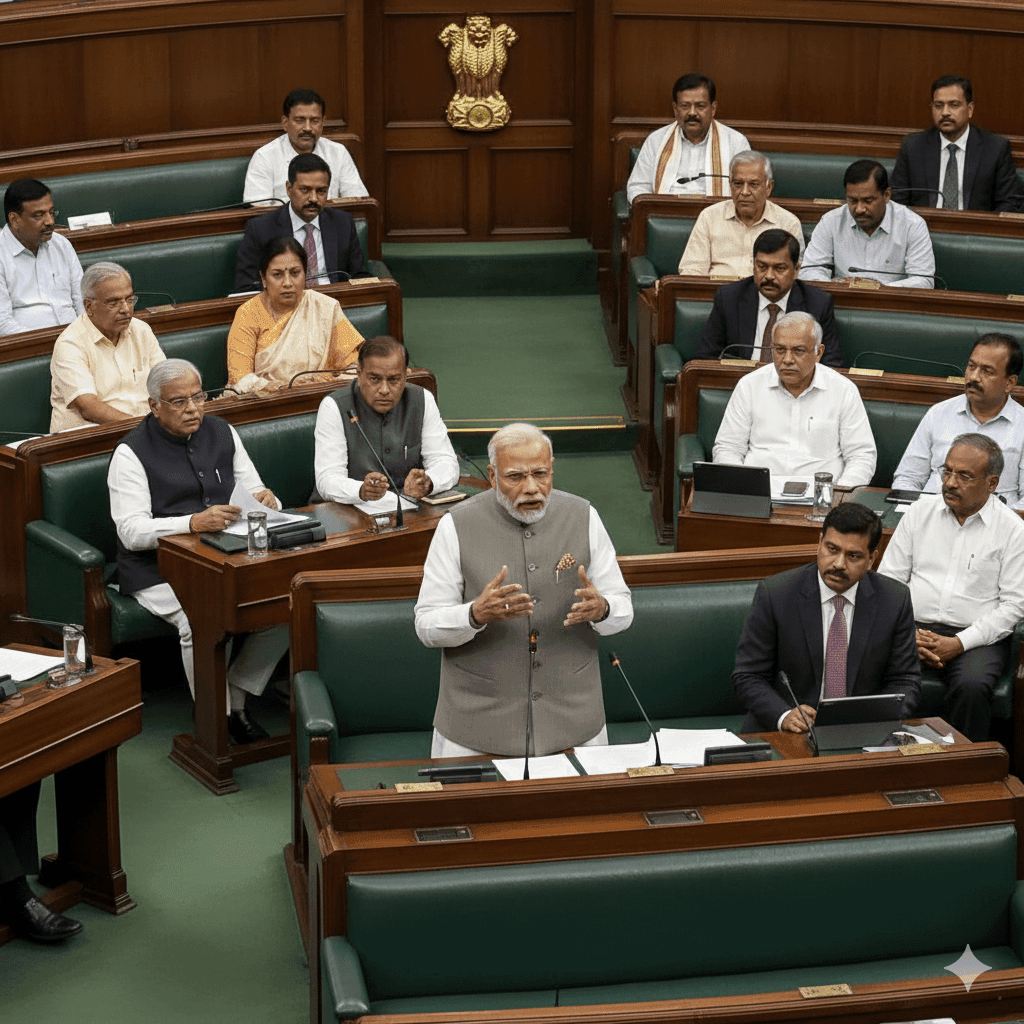
Modi Rahul Sikh row took centre stage in Parliament on Thursday as Prime Minister Narendra Modi launched a fierce attack on the Congress and its leader Rahul Gandhi, accusing them of harbouring deep-rooted hostility towards the Sikh community.
Speaking in the Rajya Sabha on February 5, 2026, the Prime Minister said Gandhi’s decision to brand Union Minister Ravneet Singh Bittu a “traitor” was not a casual remark but a deliberate insult to Sikhs and their Gurus.
The heated exchange has triggered a major political storm, intensifying tensions between the ruling BJP and the Congress ahead of key parliamentary debates.
Modi Rahul Sikh Row: How the Parliament Flashpoint Began
The Modi Rahul Sikh row traces back to a confrontation outside Parliament on Wednesday when Rahul Gandhi was protesting in solidarity with suspended MPs, many of whom belong to Punjab. As Union Minister Ravneet Singh Bittu entered the premises, a verbal exchange erupted.
Bittu allegedly remarked that the protesting MPs were sitting “as if they have won a war.” Gandhi responded sharply, calling Bittu a “traitor” in full public view.
“Here is a traitor walking right by. Look at his face,” Gandhi was heard saying.
The BJP leader immediately hit back, branding Gandhi a “desh ke dushman” (enemy of the nation). The confrontation, captured on camera, spread rapidly across social media, turning into a flashpoint by Thursday morning.
Modi Rahul Sikh Row: PM Modi’s Strongest Charge Against Congress
Addressing the Upper House in a speech lasting over 90 minutes, PM Modi escalated the issue dramatically. He argued that Gandhi’s remark went far beyond political rivalry and struck at the dignity of the Sikh community.
“He did not call others traitors when they left Congress. But when a Sikh MP leaves, he is branded a traitor,” Modi said.
The Prime Minister accused the Congress of possessing what he described as a long-standing prejudice against Sikhs, asserting that Gandhi’s words reflected “hatred filled in the Congress mindset.”
Referring to Gandhi as a “Yuvraj” with a “shaatir dimag” (crooked mind), Modi claimed the comment insulted not just Bittu but Sikh Gurus and Sikh history.
Defence of Ravneet Singh Bittu and the ‘Traitor’ Remark
In the Modi Rahul Sikh row, PM Modi strongly defended Ravneet Singh Bittu, pointing to his family background and political journey.
Bittu hails from a family that has witnessed political assassinations and major sacrifices. Modi questioned how a citizen could be branded a traitor simply for changing political allegiance.
“Calling someone a traitor is not a small word. How can a democracy tolerate this?” Modi asked.
He warned that such rhetoric could damage the fabric of parliamentary debate and deepen social divides.
Congress, Sikh Politics, and a Sensitive History
The Modi Rahul Sikh row has reopened sensitive historical wounds involving Sikh-Congress relations. Without naming specific incidents, Modi hinted at past grievances, accusing Congress of repeatedly hurting Sikh sentiments.
Political analysts note that Sikh identity and Punjab politics remain deeply emotive, and comments perceived as disrespectful can carry serious electoral consequences.
Congress leaders, however, have pushed back, arguing that Gandhi’s remark was directed at Bittu’s political conduct, not his religious identity.
Opposition Walkout and Parliament Disruption
As PM Modi’s speech gathered momentum, Opposition MPs raised slogans, accused the government of politicising religion, and eventually staged a walkout from the Rajya Sabha.
The disruption underscored how the Modi Rahul Sikh row has paralysed legislative functioning, even as crucial bills await discussion.
Parliamentary affairs observers say such confrontations signal a hardening of political discourse ahead of the next election cycle.
Why This Clash Matters Nationally
The Modi Rahul Sikh row is not just a personal spat. It reflects:
- Rising political polarisation
- The use of identity in parliamentary rhetoric
- Intensifying BJP-Congress confrontation
- The growing role of viral moments in shaping narratives
With Parliament sessions increasingly dominated by confrontation rather than consensus, such episodes are shaping public perception beyond the House.
What Happens Next
The BJP is expected to amplify the issue politically, while Congress may attempt damage control by clarifying Gandhi’s remarks. Whether the controversy leads to formal censure or fades amid newer flashpoints remains to be seen.
What is certain is that the Modi Rahul Sikh row has already become one of the most talked-about political clashes of the session.
About The Author