Indian economy growth is emerging as a central pillar of national stability and resilience
4 min read
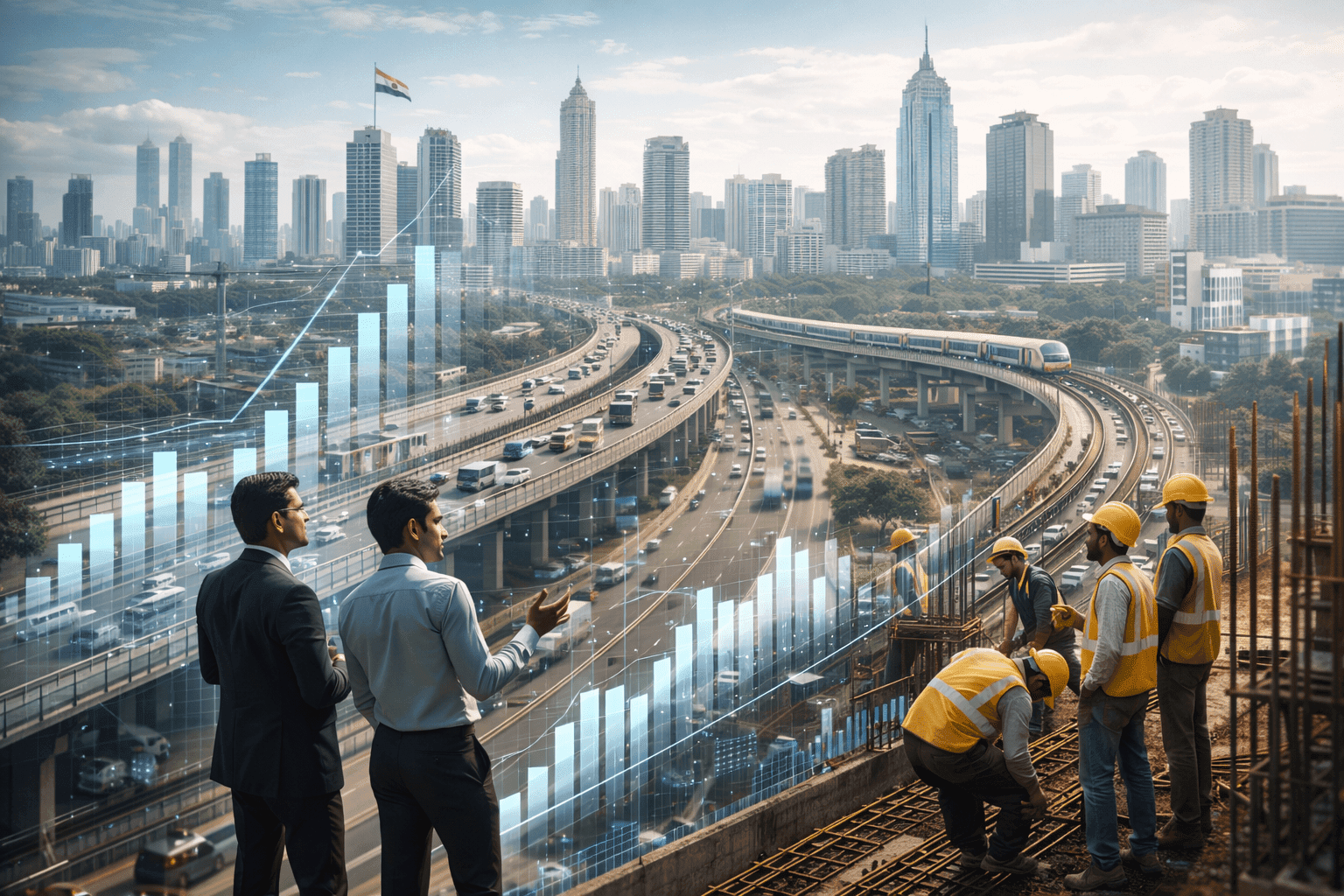
Indian economy growth continues to demonstrate resilience amid global uncertainty, driven by strong domestic consumption, sustained government spending, and structural reforms. As one of the fastest-growing major economies, India’s growth trajectory reflects a balanced contribution from services, manufacturing, agriculture, and infrastructure development. This momentum is reinforcing macroeconomic stability while supporting employment and investment across regions.
Domestic demand as a key growth engine
Indian economy growth is largely anchored in robust domestic demand, supported by rising incomes, urbanisation, and expanding middle-class consumption. Household spending on housing, automobiles, consumer goods, and services has remained resilient despite inflationary pressures. Rural demand has also shown signs of recovery, aided by improved agricultural output and government welfare schemes.
The strength of domestic consumption has reduced India’s vulnerability to external shocks and export volatility, providing a stable foundation for long-term economic expansion.
Government capital expenditure and infrastructure push
Indian economy growth has benefited significantly from increased government capital expenditure focused on infrastructure development. Investments in roads, railways, ports, airports, and digital connectivity are improving logistics efficiency and reducing transaction costs for businesses.
Large-scale infrastructure projects are generating employment, stimulating demand for construction materials, and crowding in private investment. This public spending-led growth strategy is creating long-term productive assets that enhance national competitiveness.
Manufacturing and production-linked incentives
Indian economy growth is receiving a structural boost from manufacturing expansion under production-linked incentive (PLI) schemes. These initiatives aim to strengthen domestic manufacturing capabilities across sectors such as electronics, automobiles, pharmaceuticals, renewable energy equipment, and semiconductors.
By incentivising local production and reducing import dependence, the manufacturing push is supporting job creation and export competitiveness. The gradual shift toward higher value-added manufacturing is critical for sustaining growth momentum over the medium term.
Services sector remains a growth backbone
Indian economy growth continues to be strongly supported by the services sector, which contributes a significant share of GDP. Information technology, financial services, telecommunications, tourism, and professional services remain key growth drivers.
The digital transformation of services, expansion of fintech, and global demand for IT services are reinforcing India’s position as a global services hub. This sector’s adaptability and scalability provide resilience during economic cycles.
Agriculture and rural economy contribution
Indian economy growth is closely linked to agricultural performance, which supports livelihoods for a large portion of the population. Improved crop yields, better procurement mechanisms, and targeted rural development programs are contributing to income stability in rural areas.
Investments in irrigation, agri-technology, and supply chain infrastructure are helping reduce post-harvest losses and improve market access for farmers. A stable rural economy strengthens overall consumption and economic balance.
Inflation management and monetary stability
Indian economy growth has been supported by prudent monetary policy focused on inflation control and financial stability. Managing food and fuel inflation remains a priority to protect purchasing power and sustain consumption growth.
Coordination between fiscal and monetary authorities is helping maintain macroeconomic stability while supporting growth. Stable inflation expectations also improve investor confidence and long-term planning.
External sector and trade dynamics
Indian economy growth faces both opportunities and challenges in the external sector. While exports of services and high-value goods have shown resilience, global economic slowdown and geopolitical tensions pose risks to trade flows.
Efforts to diversify export markets, improve trade infrastructure, and strengthen regional partnerships are aimed at mitigating external vulnerabilities. A balanced approach to trade and capital flows is essential for sustainable growth.
Employment generation and skill development
Indian economy growth is creating employment opportunities across construction, manufacturing, services, and digital sectors. However, aligning workforce skills with evolving industry needs remains a key challenge.
Skill development initiatives, vocational training programs, and digital literacy efforts are critical to improving employability and productivity. A skilled workforce enhances the quality and inclusiveness of growth.
Structural reforms and ease of doing business
Indian economy growth is underpinned by ongoing structural reforms aimed at improving ease of doing business, regulatory transparency, and tax compliance. Reforms in labour laws, insolvency resolution, and digital governance are strengthening institutional efficiency.
Simplification of procedures and digitisation of public services are reducing compliance costs for businesses and encouraging entrepreneurship.
Risks and challenges to growth sustainability
Despite strong momentum, Indian economy growth faces risks including global economic uncertainty, climate-related disruptions, and fiscal pressures. Managing public debt, ensuring financial sector stability, and addressing regional disparities remain important policy priorities.
Long-term growth sustainability will depend on balancing rapid expansion with environmental responsibility and social inclusion.
Outlook for Indian economy growth
Indian economy growth is expected to remain robust in the coming years, supported by domestic demand, infrastructure investment, and reform-driven productivity gains. India’s demographic advantage, digital public infrastructure, and entrepreneurial ecosystem provide strong tailwinds.
With continued policy support and investment in human capital, the Indian economy is well-positioned to sustain growth while strengthening its role in the global economic landscape.
About The Author