Dense Fog in North India: 7 Key Disruptions to Flights, Trains and Daily Life Across Delhi NCR
3 min read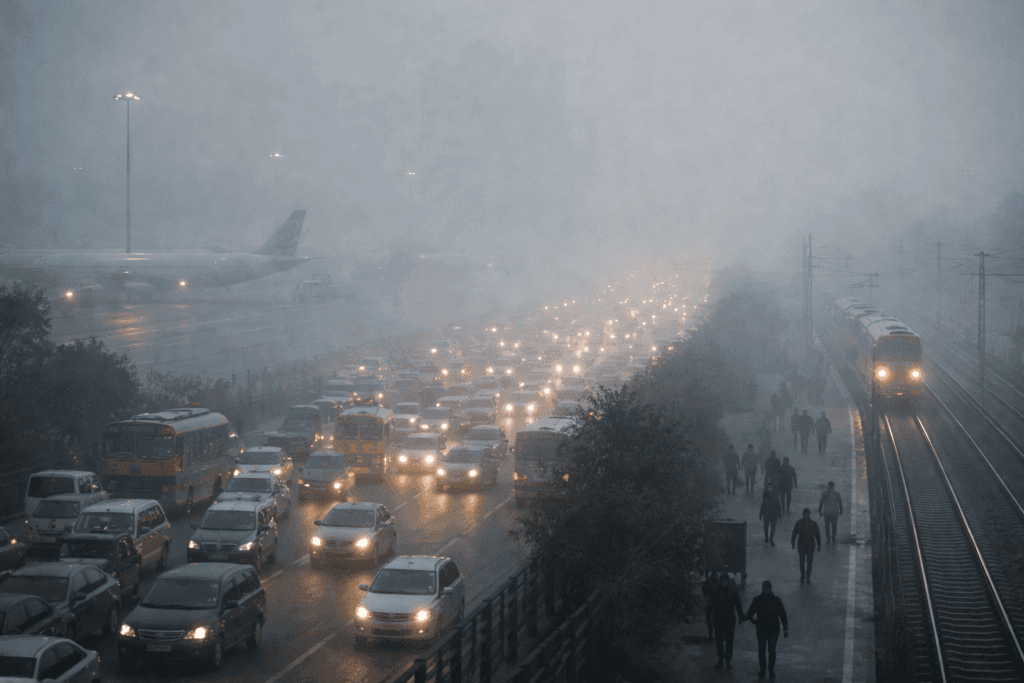

Dense fog in North India has severely disrupted transportation and daily routines across Delhi, the National Capital Region (NCR), and several neighboring states, as visibility levels dropped sharply during early morning hours. The weather phenomenon has led to widespread flight cancellations, train delays, and traffic congestion, prompting authorities to issue advisories for commuters and travelers.
According to meteorological officials, winter fog conditions have intensified due to falling night temperatures, calm winds, and increased moisture levels in the atmosphere. The impact has been particularly severe in urban and semi-urban regions where traffic density remains high even during low-visibility conditions.
Dense Fog in North India Forces Major Flight Disruptions
The aviation sector has been one of the worst affected by the dense fog. Operations at Delhi’s Indira Gandhi International Airport witnessed significant disruption as runway visibility dropped below safe operational limits during early morning hours. Several domestic flights were delayed, rescheduled, or cancelled as airlines implemented low-visibility protocols to ensure passenger safety.
Airport authorities confirmed that while advanced landing systems allow aircraft to operate under limited visibility, extremely dense fog conditions often exceed operational thresholds. As a result, airlines issued advisories urging passengers to check flight status before heading to the airport.
Travelers reported long waiting times at terminals, with many forced to rebook flights or make alternate travel arrangements. Airline operators stated that safety remains the top priority and that operations will normalize only after visibility improves.
Dense fog in North India: Train Services and Road Traffic Affected
Railway operations across northern India were also impacted due to poor visibility on tracks. Several long-distance and passenger trains experienced delays as loco pilots reduced speeds in fog-affected zones. Railway officials confirmed that precautionary speed restrictions were imposed to avoid accidents during early morning hours.
On highways and arterial roads connecting Delhi with neighboring states such as Haryana and Uttar Pradesh, traffic movement slowed considerably. Fog-related visibility issues increased the risk of collisions, leading traffic police to deploy additional personnel at major intersections and highway entry points.
Commuters were advised to use fog lights, avoid sudden lane changes, and maintain safe distances between vehicles. Emergency services remained on alert to respond to any road incidents linked to the weather conditions.
Dense fog in North India Impact schools, offices, and public movement.
The dense fog conditions also affected daily routines for residents across the region. In several areas, schools delayed morning classes to ensure the safety of students and staff. Office commuters reported longer travel times due to slow-moving traffic and reduced public transport frequency.
Health experts cautioned that prolonged exposure to cold and foggy conditions may increase respiratory discomfort, particularly among children, the elderly, and individuals with pre-existing conditions.
Weather Department Advisory and Forecast
The India Meteorological Department (IMD) issued advisories warning that dense fog conditions may persist over the next few days, particularly during early morning and late-night hours. Meteorologists explained that winter inversion conditions trap cold air near the surface, allowing fog to form and linger for extended periods.
Officials advised travelers to remain updated through official weather bulletins and avoid non-essential travel during peak fog hours. Improved visibility is expected only after wind patterns change or daytime temperatures rise significantly.
For official weather updates , news and alerts, readers can refer to the India Meteorological Department website via this external source
Authorities Step Up Safety Measures
Traffic police, airport authorities, and railway officials coordinated to manage the situation and reduce risks associated with low visibility. Public announcements, digital signboards, and social media updates were used to inform commuters about delays and safety instructions.
Experts noted that such fog episodes are common during peak winter months in northern India, but urban congestion amplifies their impact. Authorities emphasized the importance of public cooperation to ensure safety during adverse weather conditions.
Broader Economic and Travel Impact
The dense fog also affected logistics and supply chains, with delayed movement of goods across major transport corridors. Transport operators reported slower turnaround times, while delivery schedules faced disruptions.
With the winter travel season in full swing, authorities urged travelers to plan journeys carefully and remain flexible with schedules until weather conditions stabilize.
For more national updates, read https://samaacharbharat.com/
About The Author