Alexa+ AI Launch 2026: Amazon’s Smartest Assistant Enters the Generative AI Era
4 min read
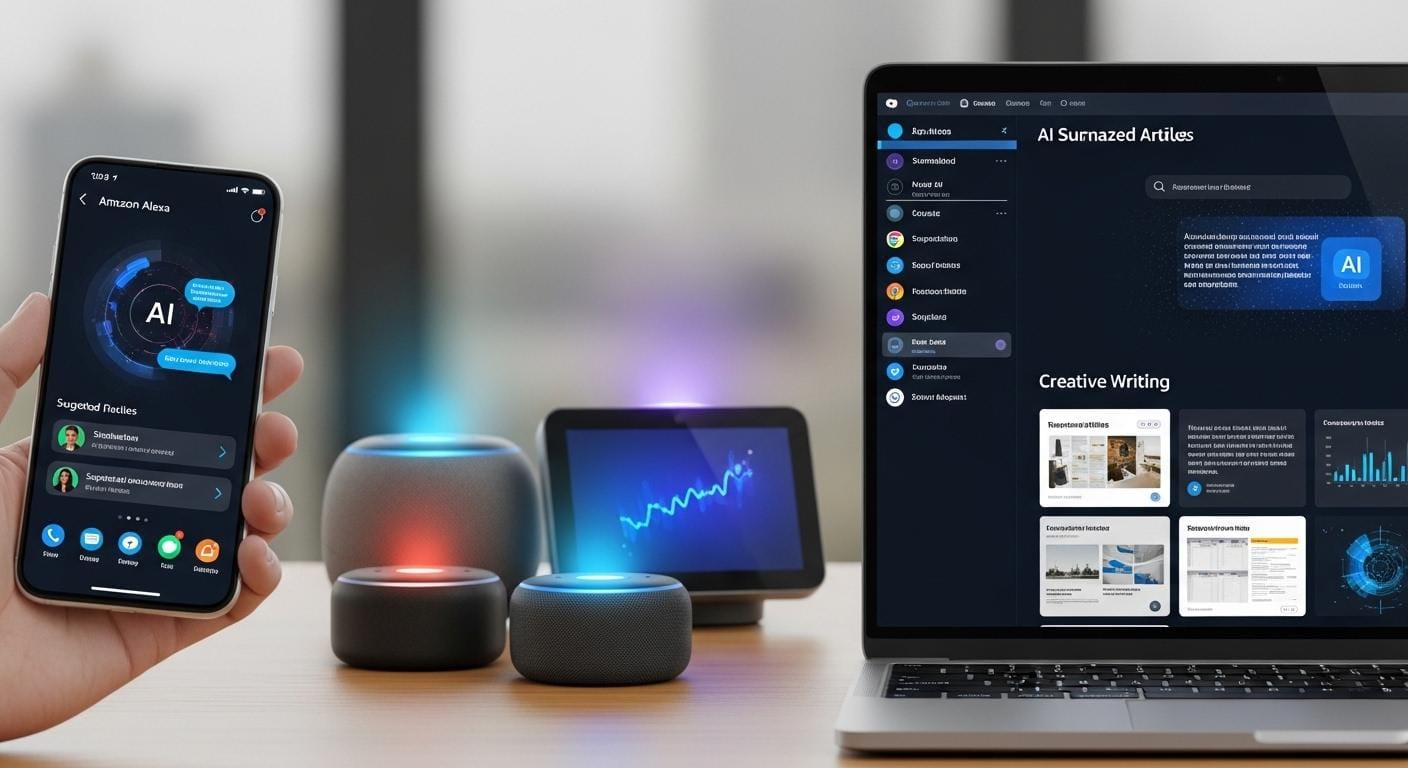
Alexa+ marks a defining moment in Amazon’s long-term artificial intelligence strategy as the company officially rolls out its most advanced assistant yet across the United States. Announced on February 4, 2026, the release signals Amazon’s transition from a traditional voice-command system into a fully generative, action-oriented AI platform designed for modern digital behavior.
This launch ends nearly a year of restricted access and positions Amazon to compete directly in a market now dominated by conversational AI systems. More importantly, it reshapes how millions of users interact with technology—moving beyond simple questions toward intelligent task execution.
From Smart Speaker Origins to a New AI Platform
When Amazon first introduced Alexa in 2014, it changed consumer expectations around voice technology. Asking questions out loud and receiving instant answers felt revolutionary at the time. However, the rapid rise of large language models over the last few years exposed the limitations of single-command, response-based assistants.
Amazon’s latest release is a direct answer to that shift. Instead of focusing solely on voice hardware, the company has redesigned its assistant as a cross-platform AI experience that works seamlessly across mobile apps, browsers, and connected devices. The emphasis is no longer just on listening—it’s on understanding, reasoning, and acting.
Alexa+ AI Launch 2026 and the End of Early Access
The Alexa+ rollout began quietly in March 2025 as an invite-only preview. Access required either joining a waitlist or purchasing select new devices, allowing Amazon to gather performance data and user feedback in a controlled environment.
With the Alexa+ AI Launch 2026, those restrictions are gone. The assistant is now broadly available to U.S. users, reflecting Amazon’s confidence in its reliability, scalability, and commercial readiness. This transition also highlights a strategic pivot: Amazon is no longer treating AI as an experiment, but as a core consumer product.
An Assistant That Acts, Not Just Answers
One of the most meaningful upgrades is the assistant’s ability to function as an autonomous digital agent. Rather than stopping at information delivery, it can now complete tasks on behalf of users.
Demonstrated use cases include scheduling home repairs, managing appointments, and arranging transportation through partners like Uber. These capabilities move the assistant closer to the role of a personal coordinator—reducing friction between intent and action.
This shift aligns Amazon’s platform with broader industry trends, where AI is expected not just to inform users, but to execute decisions within defined boundaries.
Pricing, Prime Integration, and Mass Adoption
Amazon’s pricing strategy reveals how central this assistant is to its ecosystem. Non-Prime users can subscribe for $19.99 per month, placing it squarely in competition with premium AI services. However, Prime members receive full access at no additional cost.
This bundling instantly exposes tens of millions of users to the new system, making it one of the largest consumer AI deployments to date. By integrating advanced AI into an already popular subscription, Amazon strengthens customer loyalty while increasing perceived Prime value.
A limited free tier is also available via web and app, allowing casual users to test the experience before committing.
User Engagement Signals a Rare Success Pattern
According to Amazon executives, early adoption metrics are unusually strong. Internal data shows that users engage in significantly longer and more frequent conversations than before, with usage increasing over time rather than declining.
This pattern is notable in consumer technology, where novelty often fades quickly. Sustained engagement suggests users are discovering new capabilities gradually and integrating the assistant more deeply into daily routines.
Amazon leadership has described this behavior as a hallmark of long-term product success rather than a short-lived hype cycle.
How Amazon Positions Itself Against AI Rivals
The competitive backdrop is impossible to ignore. Conversational AI leaders such as OpenAI, Google, and Anthropic have redefined user expectations around natural language interaction.
Amazon’s differentiation lies in ecosystem depth. While competitors dominate chat interfaces, Amazon embeds intelligence directly into commerce, smart homes, and everyday services. This tight integration gives it a practical advantage that purely software-based platforms struggle to match.
User Choice and the Ability to Roll Back
Not all feedback has been positive. Some Prime members were automatically upgraded during early rollout phases, leading to frustration among users who preferred the classic experience.
Amazon addressed this by allowing customers to revert to the previous version using a simple voice command. This decision reflects a careful balance between innovation and user autonomy—an increasingly important consideration in AI adoption.
Why Alexa+ AI Launch 2026 Matters Long-Term
The Alexa+ AI Launch 2026 is more than a product update; it represents Amazon’s vision for how AI fits into everyday life. By combining generative intelligence, agent-style execution, and subscription-driven distribution, the company is betting that assistants will become proactive collaborators rather than passive tools.
If adoption trends continue, this platform could become one of Amazon’s most influential consumer technologies—reshaping expectations for what AI assistants should do and how seamlessly they should integrate into daily workflows.
In an era defined by artificial intelligence, Amazon is making it clear: the assistant is no longer just listening—it’s thinking, acting, and evolving.
About The Author