China Technology Push 2026: Xi Jinping Signals Aggressive Drive for AI, Chips and Self-Reliance
4 min read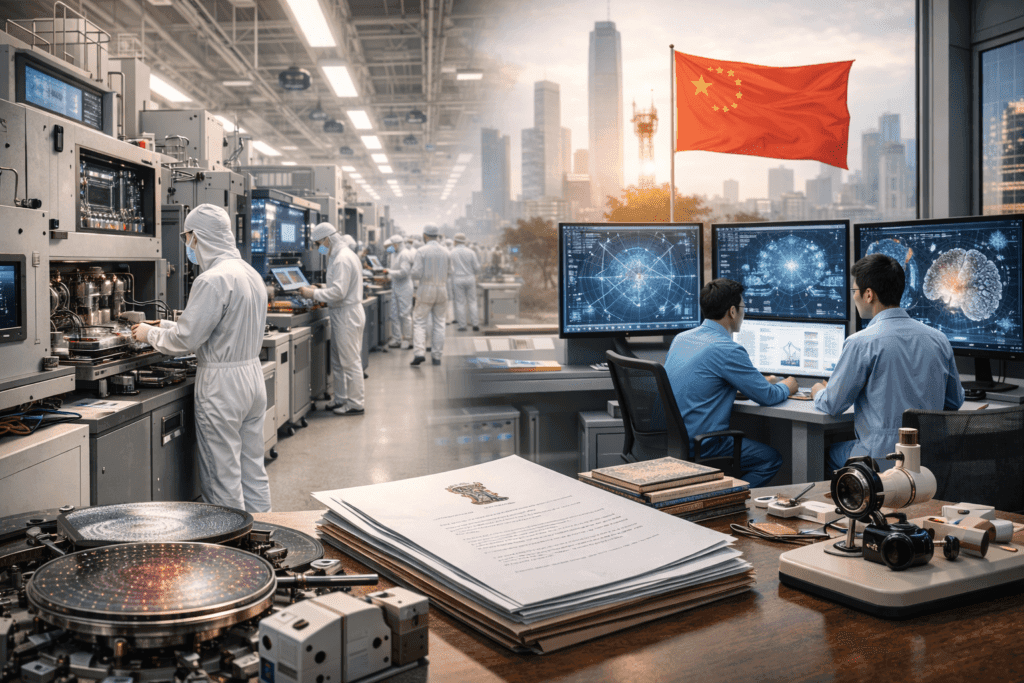
China Technology Push 2026 has taken center stage after Chinese President Xi Jinping used his year-end address to underscore China’s determination to achieve technological self-reliance in critical sectors such as artificial intelligence, semiconductors, aerospace, and advanced manufacturing. The statement comes at a time when global technology competition is intensifying and geopolitical tensions continue to reshape supply chains.
Xi highlighted that technological innovation is no longer optional but a “core pillar of national security and economic stability.” His remarks reinforce Beijing’s long-term strategy of reducing dependence on foreign technology while accelerating domestic innovation across strategic industries.
AI and Semiconductor Self-Reliance at the Core
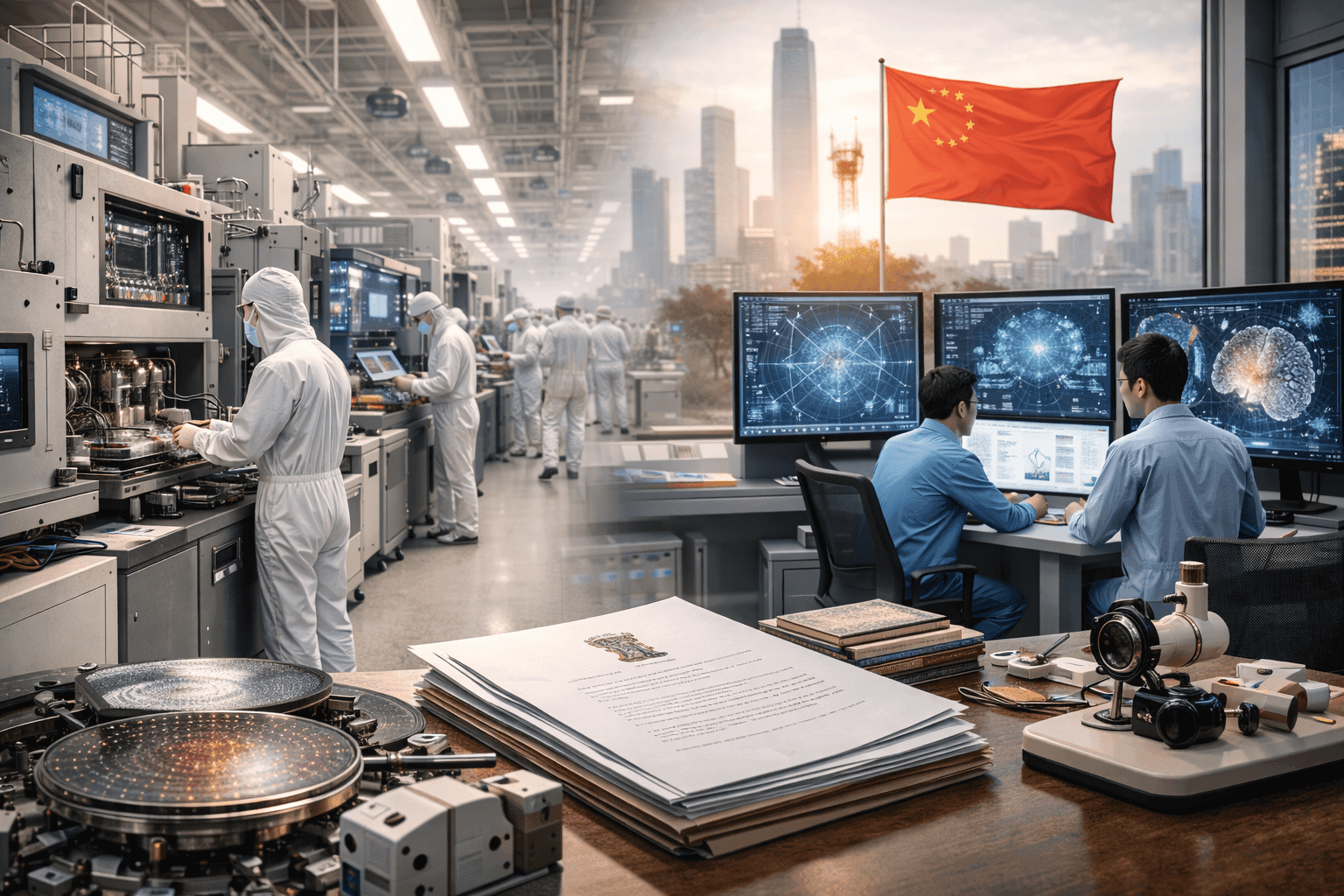
At the heart of China Technology Push 2026 lies a clear emphasis on artificial intelligence and chip manufacturing. China has significantly increased funding for AI research, data infrastructure, and computing capacity, positioning these technologies as drivers of productivity and military-civil fusion.
Semiconductors remain the most sensitive area. With continued export controls imposed by the United States, China has intensified efforts to build an end-to-end domestic chip ecosystem. This includes advanced lithography research, materials science, and talent development programs aimed at closing the gap with global leaders.
According to official statements, Beijing views semiconductor independence as essential not only for consumer electronics but also for defence systems, cloud computing, and next-generation telecommunications.
Geopolitical Context and Taiwan Factor
The China Technology Push 2026 narrative cannot be separated from regional geopolitics. In the same address, Xi reiterated China’s position on Taiwan, describing reunification as an “inevitable historical trend.” Taiwan remains a focal point of global tech supply chains due to its dominance in advanced chip manufacturing.
Although Xi did not directly reference specific companies, the strategic importance of Taiwan’s semiconductor sector looms large in Beijing’s long-term planning. Analysts believe that China’s technology push is partly designed to mitigate risks arising from potential disruptions in the Taiwan Strait.
Impact on Global Tech Markets
China’s renewed focus on technology has significant implications for global markets. International investors and multinational corporations are closely monitoring China Technology Push 2026, particularly its impact on competition, trade flows, and innovation ecosystems.
On one hand, increased domestic investment could make China a formidable competitor in AI applications, electric vehicles, renewable energy systems, and industrial automation. On the other hand, concerns persist around regulatory unpredictability, intellectual property protection, and geopolitical risk.
Several global technology firms have already adjusted their China strategies, balancing access to the Chinese market with compliance to international regulations and export restrictions.
Military-Civil Fusion and Strategic Technologies
A notable feature of China Technology Push 2026 is the continued integration of civilian innovation with military objectives. Technologies such as AI, quantum computing, and satellite systems are being developed under a dual-use framework, enabling rapid deployment across sectors.
Chinese policymakers argue that this approach maximizes resource efficiency and accelerates national capability building. Critics, however, warn that it raises ethical and security concerns, particularly in the context of autonomous weapons and surveillance technologies.
Domestic Innovation and Talent Development
Beyond infrastructure and funding, China Technology Push 2026 places strong emphasis on human capital. Universities, research institutes, and state-backed enterprises are being encouraged to collaborate closely, while incentives are offered to attract overseas Chinese scientists and engineers.
Education reforms focusing on science, technology, engineering, and mathematics (STEM) are also being scaled up. The objective is to create a sustainable innovation pipeline capable of supporting long-term technological leadership.
Challenges Ahead
Despite ambitious goals, China faces several hurdles. Advanced semiconductor manufacturing remains technically challenging, and progress has been slower than official rhetoric suggests. Restrictions on access to cutting-edge equipment continue to constrain domestic chipmakers.
Moreover, global skepticism about data governance, cybersecurity practices, and state involvement in private enterprises could limit international collaboration. Balancing national security priorities with openness to global innovation networks will be a key test for Beijing.
Why This Matters Globally
China Technology Push 2026 is not just a domestic policy agenda; it is a defining factor in the future of global technology governance. As China doubles down on self-reliance, the world may witness further fragmentation of technology standards, supply chains, and digital ecosystems.
For emerging economies, China’s model offers both opportunities and risks—access to alternative technology partnerships alongside concerns about strategic dependency.
Conclusion
Xi Jinping’s renewed emphasis on innovation signals that China Technology Push 2026 will shape economic, technological, and geopolitical dynamics in the coming years. Whether China can translate policy ambition into sustained technological leadership remains an open question, but its determination to do so is unmistakable.
About The Author