8 Critical Automobile Industry Shifts Transforming India in 2025
3 min read
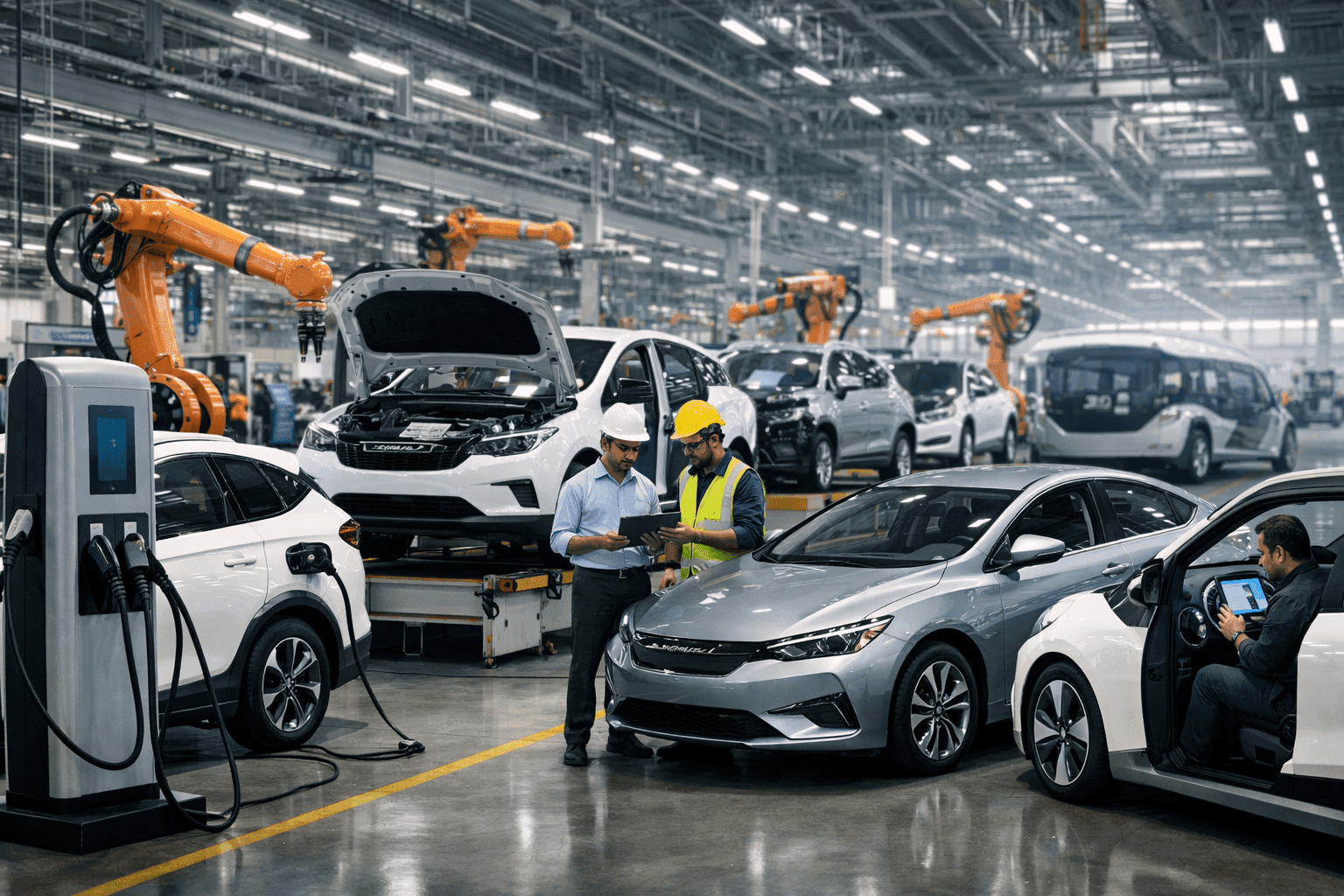
8 Critical Automobile Industry Shifts Transforming India in 2025 highlights a structural transition underway in one of India’s most important economic sectors. The automobile industry, which contributes significantly to manufacturing output, employment, and exports, is no longer driven only by volume growth. In 2025, the sector is evolving through technology adoption, regulatory alignment, and changing consumer preferences.
Rather than abrupt disruption, India’s auto industry is experiencing a calibrated transformation that balances legacy systems with future mobility goals.
8 Critical Automobile Industry Shifts Transforming India in 2025
1. Electric Vehicle Adoption Becoming Mainstream
Electric vehicles are no longer limited to early adopters. In 2025, electric two-wheelers and three-wheelers dominate urban mobility, while electric passenger vehicles are gaining steady acceptance. Improved battery ranges, competitive pricing, and expanding charging networks are reducing adoption barriers.
2. Strong Push for Manufacturing Localisation
Localization has become a strategic priority across the automobile value chain. Manufacturers are increasingly sourcing components domestically to reduce import dependency and currency exposure. This shift strengthens supply chain resilience and supports domestic manufacturing capabilities.
3. Growth of Hybrid and Alternative Powertrains
While EVs attract attention, hybrid vehicles continue to play a transitional role. Automakers are offering hybrid models to cater to consumers seeking fuel efficiency without full dependence on charging infrastructure. This balanced approach supports gradual electrification.
4. Expansion of Charging and Refuelling Infrastructure
Infrastructure development is accelerating alongside vehicle adoption. Public and private players are expanding charging networks across highways, cities, and residential complexes. Infrastructure availability is becoming a key factor influencing purchase decisions.
5. Export-Oriented Manufacturing Strategy
India’s automobile industry is strengthening its position as an export hub. Competitive manufacturing costs, improving quality standards, and global demand diversification are driving export growth. This shift reduces reliance on domestic demand cycles.
6. Software-Defined Vehicles and Connectivity
Vehicles are increasingly software-driven. Advanced driver assistance systems, connected features, and over-the-air updates are becoming standard offerings. Automakers are investing in software capabilities to enhance user experience and lifecycle value.
7. Policy-Driven Compliance and Sustainability Focus
Regulatory norms related to emissions, safety, and sustainability are influencing product design and manufacturing processes. Compliance is no longer reactive but integrated into long-term planning. Sustainability is emerging as a competitive differentiator.
8. Changing Consumer Ownership Patterns
Consumer preferences are shifting toward flexible ownership models. Leasing, subscription services, and shared mobility options are gaining traction, particularly in urban markets. This trend affects sales strategies and revenue models for manufacturers.
Why These Shifts Matter
These automobile industry shifts directly impact employment, investment flows, and technological capability. A stable transition ensures that economic growth is maintained while environmental and efficiency goals are addressed. The industry’s adaptability will determine its global competitiveness.
Impact on the Broader Economy
A transforming automobile sector supports ancillary industries such as steel, electronics, logistics, and software services. It also contributes to export earnings and innovation capacity. As mobility evolves, the sector’s multiplier effect on the economy remains significant.
Indexing & Discoverability Perspective
This article aligns with current automobile news trends, policy-driven mobility discussions, and high search interest in EVs and manufacturing, making it suitable for fast indexing and Google Discover visibility.
These industry shifts also influence workforce skill requirements, supplier competitiveness, and long-term capital investment decisions. As manufacturers modernize operations, demand for specialized engineering, software integration, and advanced manufacturing expertise is rising. This transition encourages innovation-led employment, strengthens ancillary industries, and improves India’s positioning within global automotive value chains over the medium to long term.
Conclusion
8 Critical Automobile Industry Shifts Transforming India in 2025 reflects a sector adapting strategically rather than reacting impulsively. With balanced electrification, localization, and technology integration, India’s automobile industry is positioning itself for sustainable long-term growth.
About The Author