Himanta Biswa Sarma defamation case: Assam CM moves court over ₹500 crore claim
4 min read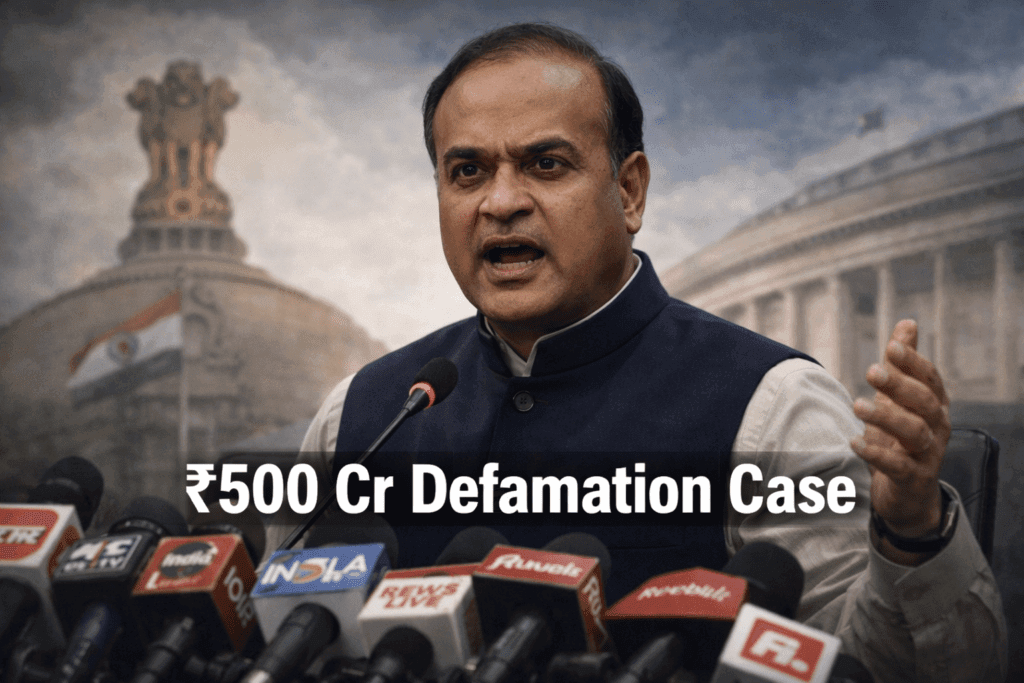
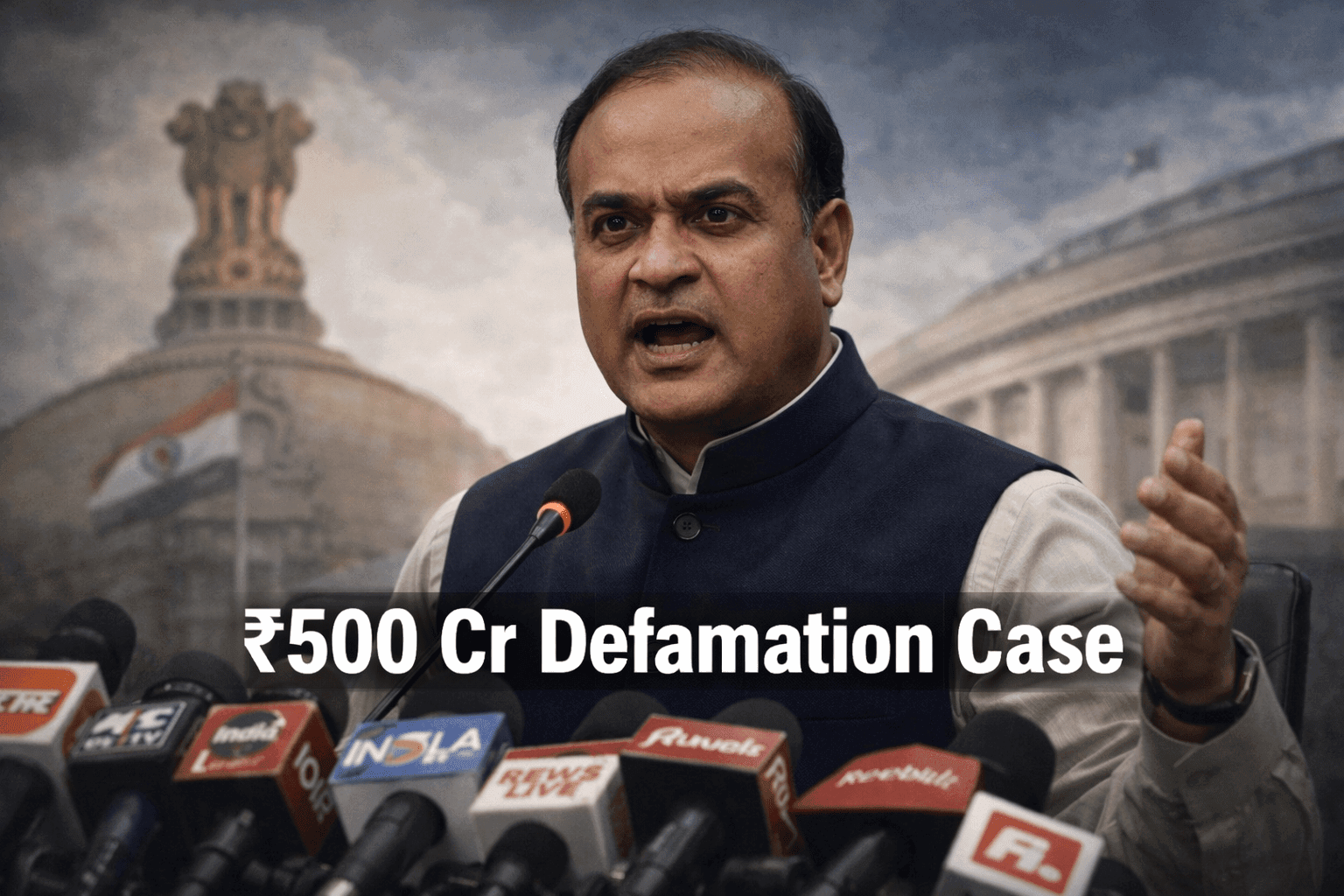
Himanta Biswa Sarma defamation case has escalated political tensions in Assam and at the national level after the Chief Minister initiated a massive ₹500 crore civil defamation suit against Congress MP Gaurav Gogoi. The lawsuit, filed before a competent civil court, accuses the opposition leader of making “reckless, malicious, and defamatory” statements that allegedly damaged the Chief Minister’s personal reputation and constitutional office.
The legal move marks one of the largest defamation claims ever filed by a sitting Chief Minister in India, underlining how political battles are increasingly shifting from rallies and television studios into courtrooms.
Himanta Biswa Sarma defamation case: What triggered the ₹500 crore lawsuit?
Himanta Biswa Sarma defamation case stems from public allegations made by Gaurav Gogoi in recent months, where the Congress leader accused the Assam Chief Minister of corruption, abuse of power, and questionable financial conduct. According to legal filings, Sarma argues that these allegations were made without evidence, amplified deliberately through press conferences and social media, and aimed at misleading the public.
The Chief Minister maintains that the statements were not part of legitimate political criticism but constituted personal attacks designed to erode public trust in a democratically elected government. The suit claims that repeated accusations caused “irreparable harm” to Sarma’s image both within Assam and nationally.
Legal experts note that Indian courts distinguish between political criticism and defamatory assertion of facts—an issue likely to be central to the proceedings.
Legal basis of the Assam CM’s defamation claim
The lawsuit is filed under civil defamation law, not criminal provisions. This allows the plaintiff to seek monetary damages for reputational harm rather than imprisonment for the accused.
According to sources familiar with the case, Sarma’s petition argues:
- The allegations were factually false
- They were made with malicious intent
- They caused reputational damage to the Chief Minister and the Assam government
- They undermined public confidence in constitutional governance
The ₹500 crore figure, the petition explains, reflects the gravity of harm, the scale of dissemination, and the stature of the constitutional office involved.
Political context: BJP vs Congress intensifies in Assam
The defamation case must also be viewed within the broader political rivalry between the Bharatiya Janata Party (BJP) and the Indian National Congress in Assam. Himanta Biswa Sarma, once a Congress leader himself, is now one of the BJP’s most aggressive political strategists in the Northeast.
Congress leaders argue that the lawsuit is an attempt to silence opposition voices ahead of upcoming political battles. They maintain that questioning those in power is a democratic right and accuse the Chief Minister of using legal pressure to intimidate critics.
The BJP, however, insists that freedom of speech does not include the freedom to defame, and that public figures also have the right to protect their reputation through lawful means.
Gaurav Gogoi’s response to the defamation suit
Congress MP Gaurav Gogoi has rejected the accusations, stating that his remarks were based on issues of public interest and accountability. He has indicated that he will contest the case legally, asserting that political leaders must answer questions raised by the opposition rather than resort to litigation.
Gogoi’s supporters argue that courts should not become venues for settling political disagreements and warn that excessive defamation suits could discourage whistleblowing and investigative scrutiny.
At the same time, legal analysts point out that if statements are proven false and malicious, courts have consistently upheld the right to seek civil damages.
Defamation and Indian democracy: A larger debate
The Himanta Biswa Sarma defamation case has revived a national debate on the balance between free speech and reputational rights in Indian democracy.
Key questions include:
- Where does political criticism end and defamation begin?
- Should public officials file large monetary claims?
- Does civil defamation chill free speech or ensure responsible discourse?
India’s Supreme Court has repeatedly held that reputation is an integral part of the right to life under Article 21, while also protecting free expression under Article 19(1)(a). How lower courts interpret this balance in high-profile political cases remains closely watched.
Possible legal and political outcomes
Legal experts outline multiple possible outcomes:
- Dismissal at preliminary stage if the court finds no prima facie defamation
- Full civil trial, involving evidence, witnesses, and cross-examination
- Out-of-court settlement, though politically unlikely
- Damages awarded or rejected, depending on proof of reputational harm
Politically, the case could influence public narratives in Assam, shaping perceptions of governance, accountability, and opposition strategy.
Why this case matters beyond Assam
While the lawsuit originates in Assam, its implications are national. Senior politicians across parties are watching closely, as the verdict could influence how aggressively defamation law is used in Indian politics.
If courts endorse high-value civil claims, more leaders may turn to litigation. Conversely, a strong defence of political speech could restrain such lawsuits in the future.
For more news & updates please follow : Samaacharbharat
About The Author