Pakistan T20 World Cup 2026: Politics, Pressure and a Campaign Shaped Beyond Cricket
4 min read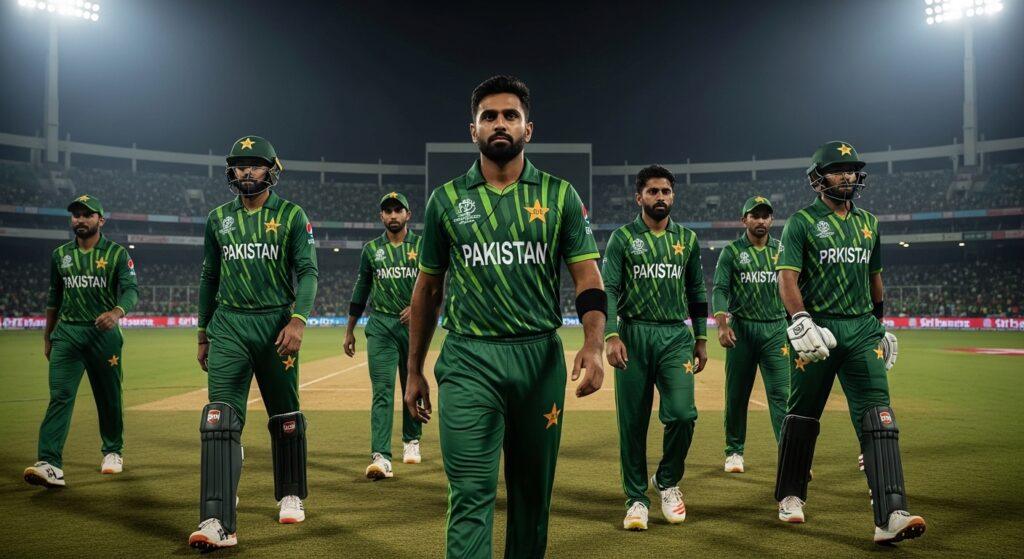
Pakistan T20 World Cup 2026 preparations have taken an extraordinary turn, with political developments threatening to overshadow on-field performance at one of cricket’s biggest global tournaments. As the countdown to the 2026 Twenty20 World Cup continues, Pakistan’s campaign is being shaped as much by geopolitics as by batting line-ups and bowling strategies.
Despite entering the tournament in strong competitive form, Pakistan now faces an unprecedented scenario: a government-mandated boycott of their group-stage match against India. The decision has injected uncertainty, pressure, and complexity into what was expected to be a straightforward path through the group stage.
Pakistan T20 World Cup 2026: The Boycott That Changed the Tournament Equation
At the center of the controversy is a directive issued by the Pakistan government instructing the Pakistan Cricket Board (PCB) and the national team not to play their scheduled group-stage fixture against India on February 15.
Prime Minister Shehbaz Sharif publicly confirmed the move, stating that the boycott was intended as a gesture of solidarity with Bangladesh, following that nation’s removal from the tournament. While the political intent may be clear, the sporting consequences are severe.
For Pakistan, refusing to play India effectively means conceding two crucial points in Group A without contest. In a short-format tournament where margins are razor-thin, this decision eliminates any margin for error.
Captain Salman Ali Agha acknowledged the team’s lack of control over the situation, stating plainly that the players would follow instructions from the government and the PCB leadership.
Group A Pressure Intensifies for Pakistan
The Pakistan T20 World Cup 2026 group-stage path is now far more dangerous than originally anticipated. With the India match off the table, Pakistan must win every remaining group fixture to qualify for the next round.
Their opponents—the United States, the Netherlands, and Namibia—may not carry traditional heavyweight status, but recent history suggests complacency would be costly.
Pakistan still bears the scars of the 2024 tournament in Texas, where the United States stunned them in a Super Over, resulting in an early group-stage exit. Alarmingly, several players from that defeat remain part of the current squad, including Babar Azam, Fakhar Zaman, Usman Khan, Naseem Shah, Shadab Khan, and Shaheen Shah Afridi.
The Netherlands, meanwhile, has built a reputation as a disruptive force in global tournaments, most notably defeating South Africa in 2022. Pakistan opens their campaign against the Dutch in Colombo, followed by a high-pressure rematch with the United States on February 10.
With the India fixture officially boycotted, Pakistan faces an unusual eight-day gap before their final group match against Namibia on February 18—a scheduling anomaly that could disrupt momentum.
Tactical Transformation Under Mike Hesson
Away from the political noise, Pakistan T20 World Cup 2026 preparations have undergone a notable tactical evolution under head coach Mike Hesson.
Since taking charge, the former New Zealand coach has pushed Pakistan toward a more aggressive and flexible T20 approach. This shift was evident during Pakistan’s recent 3–0 series sweep of Australia in Lahore, where intent and tempo were central themes.
Captain Salman Ali Agha has been encouraged to attack from the No. 3 position, while the batting order has been restructured to balance explosiveness with stability. The opening combination of Saim Ayub and Sahibzada Farhan is expected to set the tone, with Babar Azam moving into a stabilizing role at No. 4.
Although Babar’s recent stint in the Big Bash League with the Sydney Sixers was below expectations, team management continues to view his experience as critical, particularly on slower Sri Lankan surfaces.
Spin-Heavy Strategy for Sri Lankan Conditions
A defining feature of Pakistan T20 World Cup 2026 strategy is their deliberate adaptation to Sri Lankan conditions. With all of Pakistan’s matches—including the potential semifinals and the final—scheduled in Sri Lanka, selectors have leaned heavily toward spin.
This tactical pivot is so pronounced that fast bowler Haris Rauf, despite strong performances in Australia’s BBL, was left out of the squad in favor of slower bowling options.
Pakistan’s spin arsenal includes Shadab Khan, Abrar Ahmed, Mohammad Nawaz, and part-time off-spin from opener Saim Ayub during the powerplay. One of the most intriguing selections is Usman Tariq, whose unconventional bowling action—marked by a pronounced pause before delivery—proved effective in unsettling Australian batters during the recent series.
The pace attack, however, has not been abandoned entirely. Shaheen Shah Afridi leads the seam unit, supported by Naseem Shah, Salman Mirza, and all-rounder Faheem Ashraf.
Conclusion: A Campaign Defined by Risk and Resilience
The Pakistan T20 World Cup 2026 campaign is shaping up as one of the most complex in the team’s history. They arrive as former champions and regular semifinal contenders, armed with a tactically refreshed squad and recent series success.
Yet, political intervention has imposed a self-inflicted handicap that could undo months of preparation. With points already sacrificed, Pakistan must now execute flawlessly against every remaining opponent.
As the tournament begins, the spotlight will remain fixed not just on Colombo but also on Islamabad. The central challenge for Captain Salman Ali Agha and Coach Mike Hesson will be insulating the squad from political fallout and ensuring that off-field decisions do not derail on-field ambition.
In a tournament where Pakistan has voluntarily narrowed its path, perfection is no longer optional—it is mandatory.
About The Author