BS6 Vehicle Rule Update: 6 Big Changes Every Car & Bike Owner Must Know
3 min read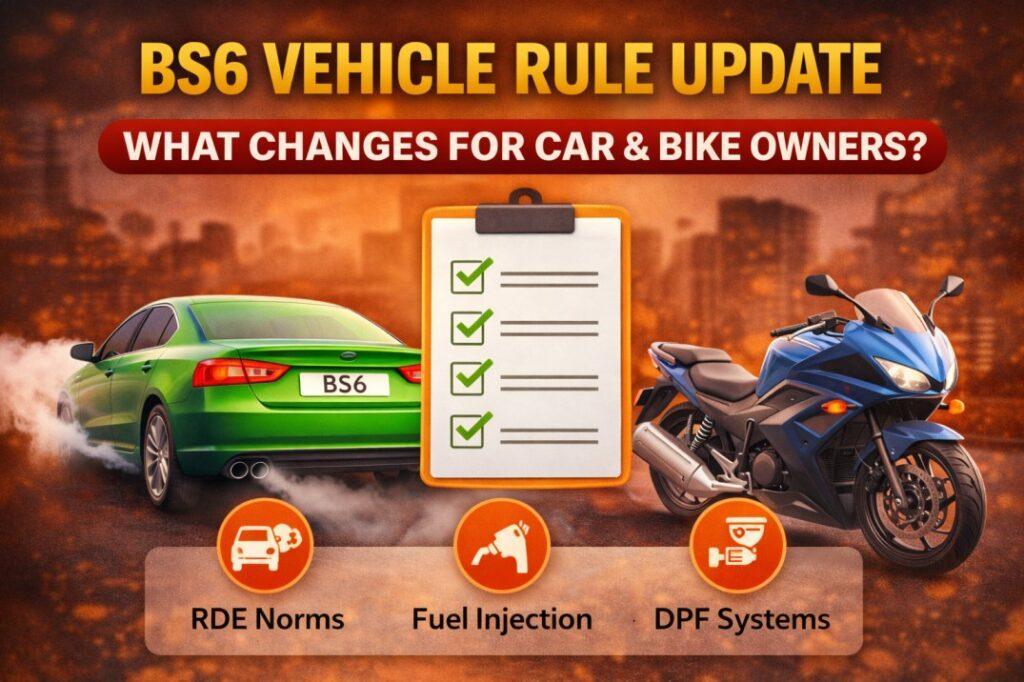
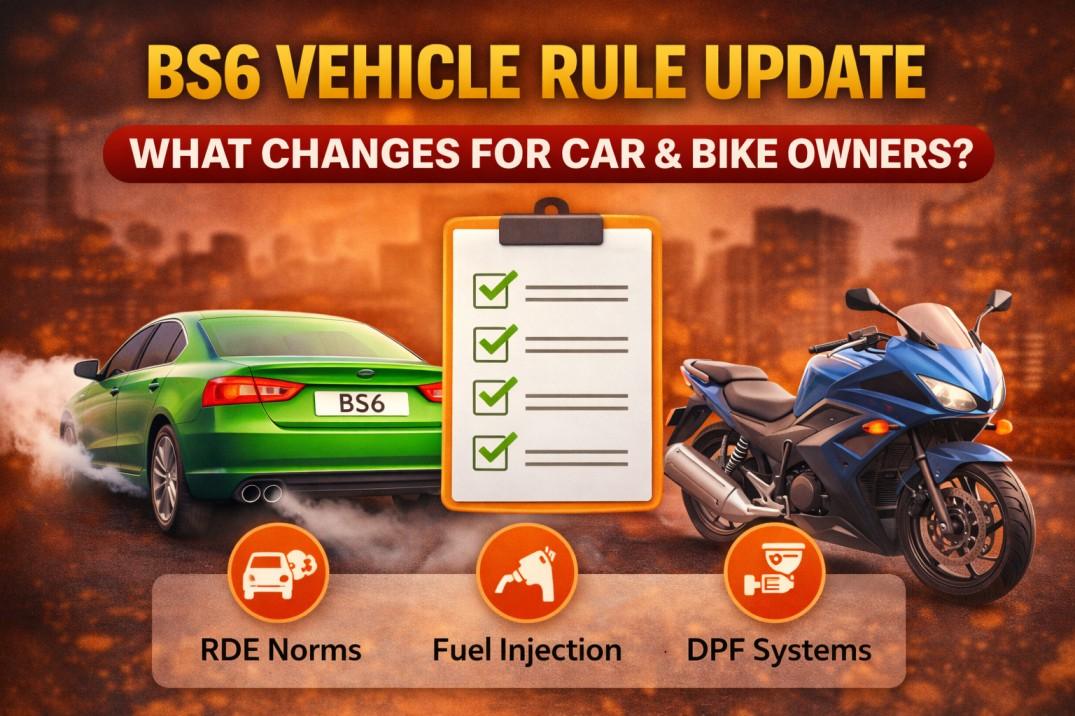
The BS6 Vehicle Rule Update has come into sharp focus once again as stricter emission compliance, real-driving emission norms, and regulatory enforcement begin impacting millions of car and two-wheeler owners across India. The updated BS6 framework is no longer limited to vehicle manufacturing alone—it now directly affects ownership costs, maintenance, fuel usage, and compliance responsibilities.
With authorities tightening checks and manufacturers adapting to new standards, vehicle owners need to clearly understand what has changed and how it impacts them.
BS6 Vehicle Rule Update: Why the Rules Are Being Enforced More Strictly
The Bharat Stage-VI (BS6) emission norms were introduced to significantly reduce air pollution by controlling harmful emissions such as nitrogen oxides, particulate matter, and hydrocarbons from vehicles.
While BS6 standards were implemented earlier, the latest enforcement phase focuses on
- Real-world emission performance
- Long-term compliance after vehicle sale
- Better monitoring of pollution levels
This shift ensures that vehicles remain compliant not just on paper, but also during actual usage on Indian roads.
Key Changes Under the BS6 Vehicle Rule Update
The latest BS6 Vehicle Rule Update introduces multiple changes that directly impact car and bike owners.
1️⃣ Real Driving Emission (RDE) Compliance
Vehicles must now meet emission norms under real driving conditions, not just laboratory tests. This means pollution levels are checked during actual road usage.
2️⃣ Updated Engine Calibration
Manufacturers have re-tuned engines to meet stricter limits, which can slightly affect:
- Mileage
- Engine responsiveness
- Performance under heavy load
3️⃣ Advanced Emission Control Systems
BS6 vehicles are equipped with:
- Diesel Particulate Filters (DPF)
- Selective Catalytic Reduction (SCR) systems
- Oxygen sensors and onboard diagnostics
These systems require proper maintenance to avoid issues.
Impact on Car Owners: What You Should Know
For car owners, the BS6 Vehicle Rule Update brings both benefits and challenges.
Benefits:
- Lower tailpipe emissions
- Improved air quality
- Better engine monitoring
Challenges:
- Higher vehicle prices
- Increased maintenance costs
- DPF clogging issues in diesel cars used for short trips
Experts recommend regular highway driving for diesel cars to prevent DPF blockage.
Impact on Bike Owners: Changes for Two-Wheelers
Two-wheelers are also affected under the BS6 Vehicle Rule Update, especially in the commuter and premium segments.
Key changes include:
- Fuel injection replacing carburetors
- Improved exhaust after-treatment systems
- Slight increase in vehicle prices
While bikes have become cleaner and more efficient, repairs and servicing costs may be marginally higher due to advanced components.
Fuel Compatibility and Usage Rules
Under the updated BS6 norms:
- Only BS6-compliant fuel should be used
- Mixing low-quality or adulterated fuel can damage emission systems
- Regular servicing is critical to maintain compliance
Vehicle owners are advised to refuel only at authorized fuel stations to avoid long-term damage.
BS6 Vehicle Rule Update: What Happens If You Don’t Comply?
Authorities have increased monitoring and enforcement under the BS6 framework.
Non-compliance may lead to:
- Failed emission tests
- Heavy fines
- Vehicle registration issues
- Possible restrictions on vehicle usage in high-pollution zones
Cities with severe air quality problems may enforce stricter checks in the coming months.
Cost Impact: Are BS6 Vehicles More Expensive to Maintain?
Yes, the BS6 Vehicle Rule Update has increased ownership costs slightly.
Reasons include:
- Advanced emission components
- Higher service costs
- Costly replacement of DPF and sensors
However, proper driving habits and regular servicing can significantly reduce unexpected expenses.
What Car and Bike Owners Should Do Now
To stay compliant under the BS6 Vehicle Rule Update, vehicle owners should:
✔ Follow manufacturer service schedules
✔ Avoid short, stop-go trips in diesel vehicles
✔ Use recommended engine oils
✔ Monitor warning lights carefully
✔ Drive responsibly to maintain emission efficiency
Future Outlook: More Changes Ahead?
Experts believe future emission rules will become even stricter as India aligns with global environmental standards. Electric vehicles, hybrids, and alternative fuels are expected to gain stronger policy support.
For now, BS6 compliance is mandatory, and vehicle owners must adapt to these changes to avoid penalties and ensure smooth ownership.
Conclusion
The BS6 Vehicle Rule Update marks a major shift in how vehicles are regulated and maintained in India. While the changes may increase costs and responsibility for owners, they play a crucial role in reducing pollution and improving air quality.
Understanding these updates and adapting driving habits will help car and bike owners stay compliant and avoid unnecessary trouble.
About The Author