RBI Policy Stability Keeps Indian Markets Stable Amid Global Volatility
3 min read
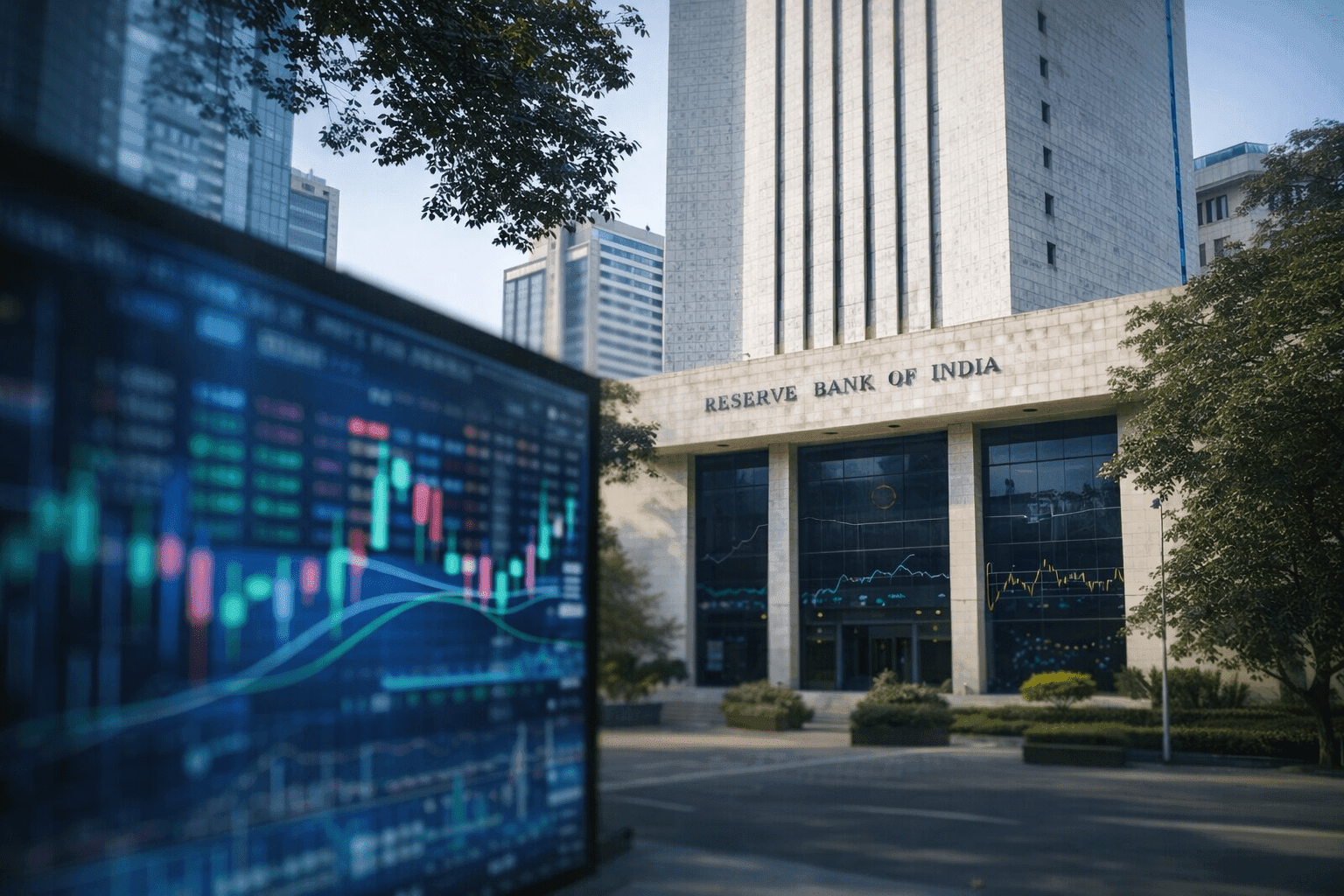
RBI policy stability has emerged as a key support factor for Indian financial markets as global equities, currencies, and commodities face renewed volatility. Signals from the Reserve Bank of India indicate a continued focus on balancing inflation control with growth support, reassuring investors amid uncertain global conditions.
Indian equity markets showed relative calm this week compared to sharp movements in global peers. Analysts attribute this resilience to strong domestic demand, controlled inflation expectations, and confidence that the central bank will avoid abrupt policy shifts unless external risks intensify.
RBI’s Current Policy Stance
The Reserve Bank of India has maintained a neutral monetary policy stance, indicating that interest rates will remain steady unless inflation deviates sharply from target levels. Officials have reiterated that price stability remains a priority, but not at the cost of choking economic growth.
This approach underlines RBI policy stability, a factor that markets increasingly value in an environment where several global central banks are still grappling with inflation and slowing growth.
Bond yields softened slightly following recent commentary, reflecting expectations that rate hikes are unlikely in the near term.
Equity Markets Hold Ground
Indian stock indices remained range-bound but stable, supported by buying in banking, infrastructure, and select consumer sectors. Domestic institutional investors continued to provide support, offsetting cautious foreign portfolio flows.
Market participants note that India’s strong retail participation and steady SIP inflows into mutual funds have helped reduce dependence on foreign capital, insulating markets from sudden global shocks.
Inflation and Growth Balance
Inflation remains a key variable shaping RBI Policy Stability. While food prices have shown intermittent spikes due to seasonal factors, core inflation has stayed within manageable limits.
The central bank has signalled that it is closely monitoring commodity prices, particularly crude oil, which remains a risk due to geopolitical tensions. However, officials have indicated that inflation expectations are currently anchored.
On the growth front, credit demand remains strong across retail, MSME, and infrastructure segments, suggesting underlying economic momentum.
Banking and Credit Trends
Indian banks continue to report healthy balance sheets, improved asset quality, and stable capital adequacy ratios. Credit growth remains robust, supported by demand from housing, small businesses, and government-led infrastructure projects.
Financial experts believe that predictable policy signals have allowed banks to plan lending strategies more effectively, reducing stress and volatility.
Global Factors at Play
Despite domestic strength, global factors remain a risk. Slowing growth in advanced economies, geopolitical conflicts, and currency volatility continue to influence investor sentiment.
However, India’s macroeconomic fundamentals—moderate debt levels, strong forex reserves, and steady fiscal consolidation—have helped limit spillover effects.
Analysts say RBI policy stability has positioned India as a relatively safe destination for long-term investors amid global uncertainty.
What Investors Are Watching Next
Market participants are now tracking:
- Inflation data trends
- Global crude oil prices
- US Federal Reserve policy signals
- Currency movements
Any sharp deviation in these factors could influence RBI’s future decisions.
Market experts also point out that RBI Policy Stability has helped moderate currency volatility, with the Indian rupee trading within a relatively narrow range compared to several emerging market peers. Stable currency movement has reduced imported inflation pressures and improved confidence among foreign investors assessing long-term exposure to Indian assets.
At the same time, predictable monetary policy has supported government borrowing programmes by keeping bond market disruptions in check. Analysts note that consistency in RBI communication has limited speculative activity and discouraged abrupt shifts in market expectations. As global financial conditions remain uncertain, policymakers are expected to continue prioritising clarity and gradualism, reinforcing the role of RBI Policy Stability as a key anchor for India’s financial ecosystem.
Why This Matters
Central bank communication plays a critical role in shaping financial markets. The current emphasis on RBI Policy Stability has reduced uncertainty, supported investor confidence, and helped Indian markets weather global volatility better than many peers.
As long as inflation remains controlled and growth momentum continues, analysts expect policy continuity to remain intact.
About The Author