Delhi NCR Air Pollution Latest News: 7 Alarming Developments as AQI Remains Severe
3 min read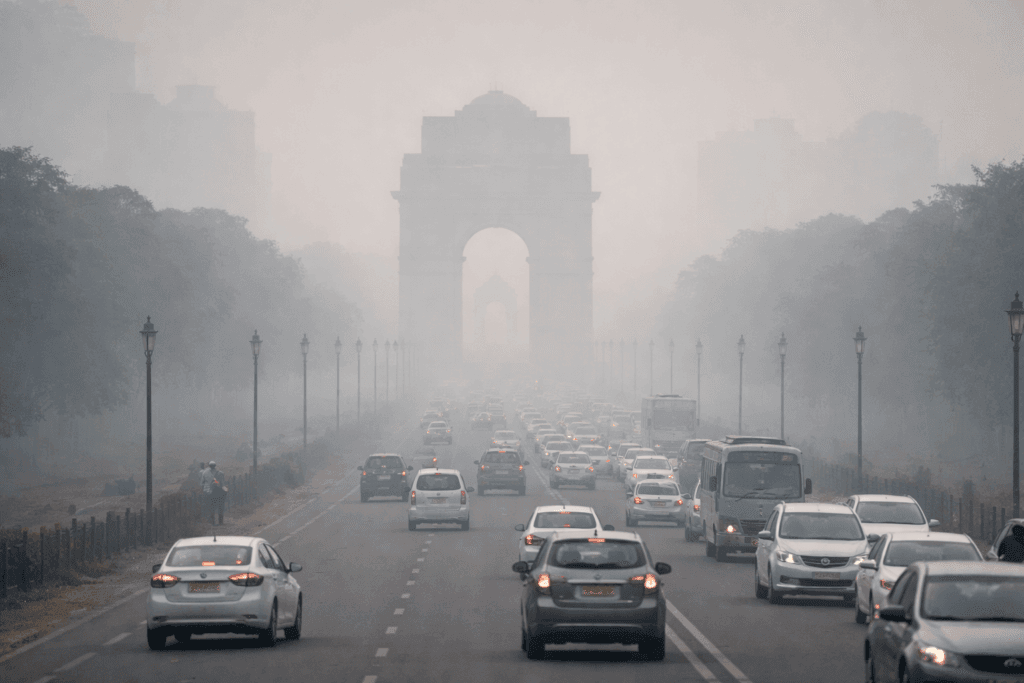
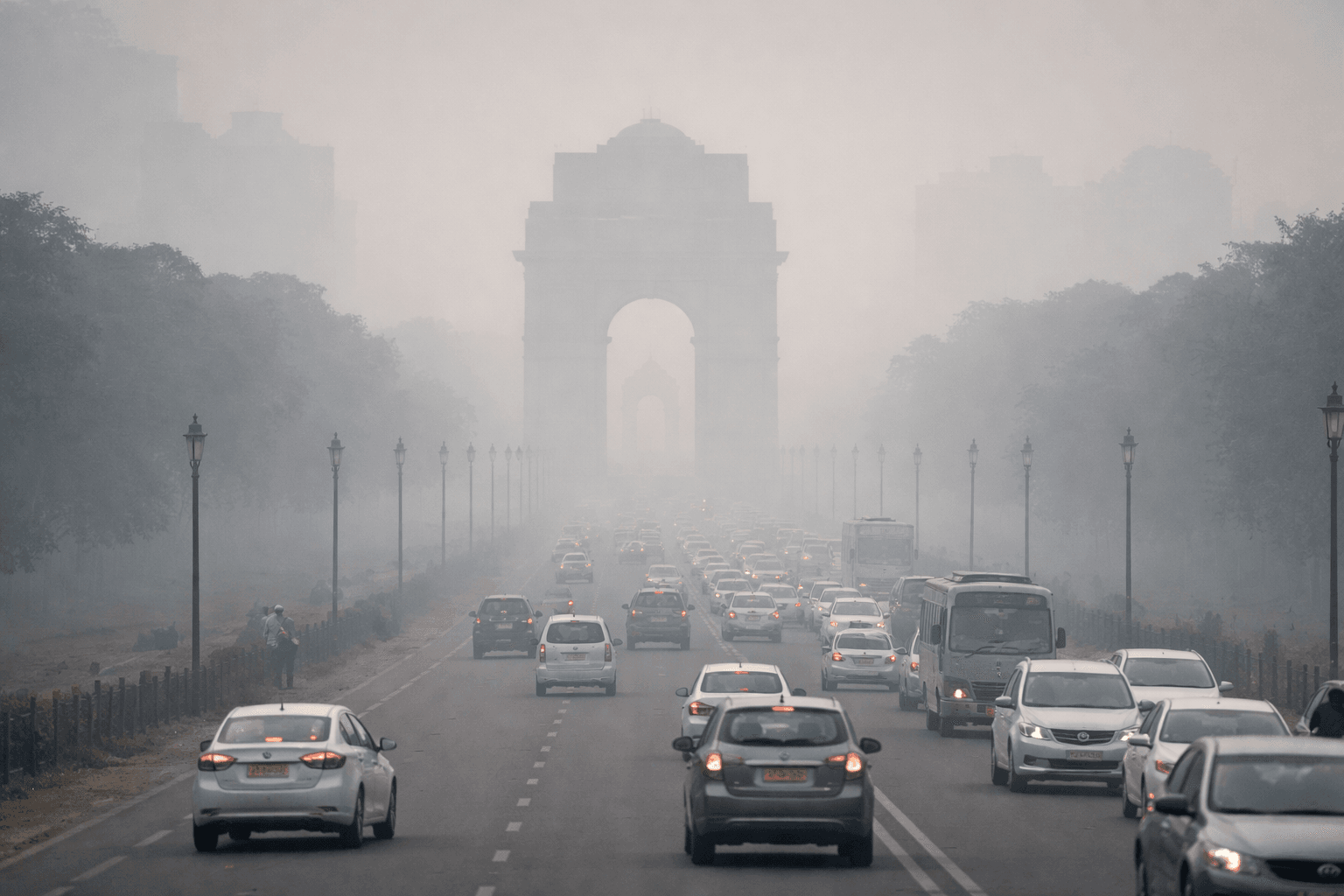
Delhi NCR air pollution latest news continues to raise serious public health and governance concerns as air quality across the national capital region remains in the severe category for extended periods. Despite emergency measures, favorable forecasts, and repeated policy interventions, winter 2025 has once again exposed the structural nature of Delhi’s pollution crisis.
Delhi NCR air pollution latest news: Air Quality Remains in the ‘Severe’ Zone
According to official monitoring data, the Air Quality Index across multiple locations in Delhi, Noida, Gurugram, Faridabad, and Ghaziabad has consistently crossed the 400-mark, categorizing air quality as severe. Health experts warn that prolonged exposure at these levels can significantly increase respiratory and cardiovascular risks, especially for children and the elderly.
Weather Conditions Worsen the Crisis
Meteorological factors have played a crucial role in trapping pollutants. Dense fog, calm winds, and low mixing height during early mornings have prevented dispersion of particulate matter. The India Meteorological Department has repeatedly issued orange and red alerts for fog, compounding traffic disruptions and aviation delays across the region.
GRAP Measures Reintroduced
In response to deteriorating air quality, authorities reactivated stringent stages of the Graded Response Action Plan. These include restrictions on construction activity, limits on diesel vehicles, suspension of certain industrial operations, and intensified monitoring of dust and waste burning.
However, environmental analysts argue that these emergency actions remain reactive rather than preventive.
CAQM Pushes Long-Term Strategy
The Commission for Air Quality Management has outlined a multi-year roadmap aimed at delivering more “blue-sky days” over the next three to four years. The plan focuses on:
- Cleaner fuel transition
- Regional coordination among NCR states
- Upgrading industrial emission standards
- Better enforcement against stubble burning
While the roadmap has been welcomed, experts caution that tangible results will depend on strict execution rather than announcements.
December Records Raise Alarm
Data trends indicate that December 2025 is shaping up to be one of the worst months for air quality since 2018. Environmental groups highlight that recurring annual peaks show limited improvement despite billions spent on mitigation. The Delhi NCR air pollution latest news narrative is increasingly shifting from seasonal concern to chronic governance failure.
Technology and AI-Based Solutions
The Delhi government has initiated discussions with academic institutions to explore AI-enabled pollution management systems. These tools are expected to help predict pollution spikes, identify local emission sources, and enable targeted interventions. While promising, specialists warn that technology alone cannot substitute policy enforcement and regional cooperation.
Health and Economic Impact
The pollution crisis is no longer confined to environmental metrics. Hospitals report a surge in respiratory complaints, while corporate offices and schools continue to adjust work and attendance schedules. Recent incidents, including professionals citing toxic air as a reason for relocation, underline the broader socio-economic toll of persistent smog.
Why Delhi NCR’s Pollution Persists
Experts attribute the crisis to a combination of:
- Vehicular emissions
- Construction dust
- Industrial pollution
- Crop residue burning in neighbouring states
- Weak inter-state coordination
Without addressing all contributors simultaneously, incremental improvements remain fragile.
What Lies Ahead
While forecasts suggest temporary relief with changing wind patterns, long-term improvement in air quality will require sustained political commitment, regional accountability, and year-round action. As Delhi NCR air pollution latest news continues to dominate headlines, the challenge before policymakers is to move beyond emergency firefighting toward permanent solutions. Public pressure is mounting for permanent, enforceable, year-round clean air solutions. Environmental experts stress that without strict accountability, interstate cooperation, and continuous monitoring throughout the year, Delhi NCR’s air pollution crisis will continue to resurface every winter, undermining public health, economic productivity, and the region’s overall quality of life.
For millions living in the capital region, clean air is no longer a seasonal demand—it is a public health imperative.
About The Author