Electric Vehicle Sales in India Surge as Charging Infrastructure Expands Nationwide
3 min read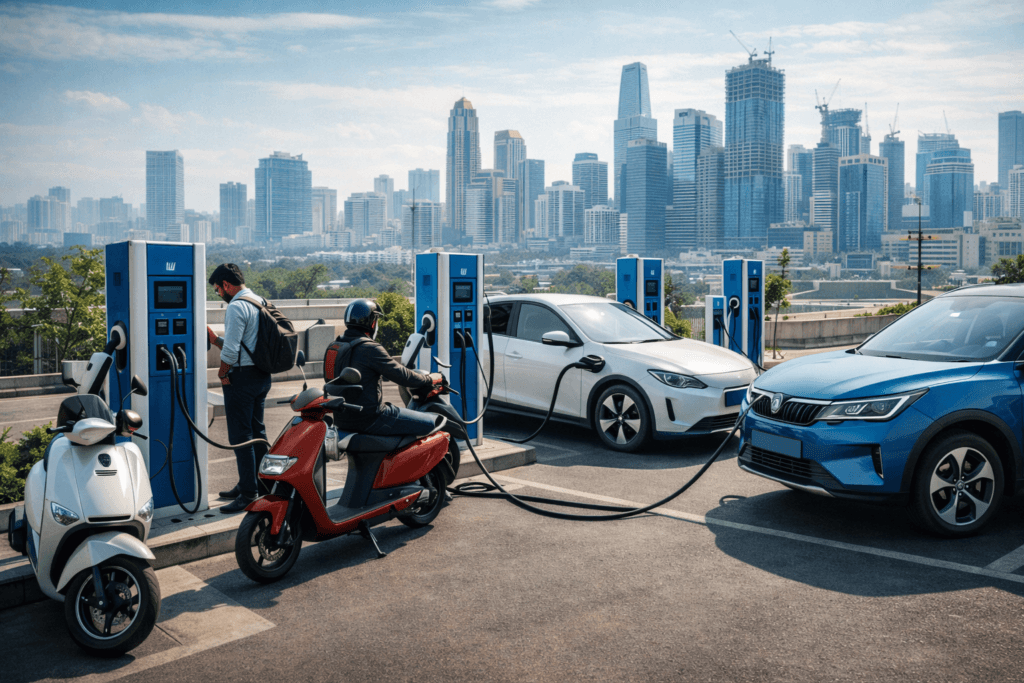
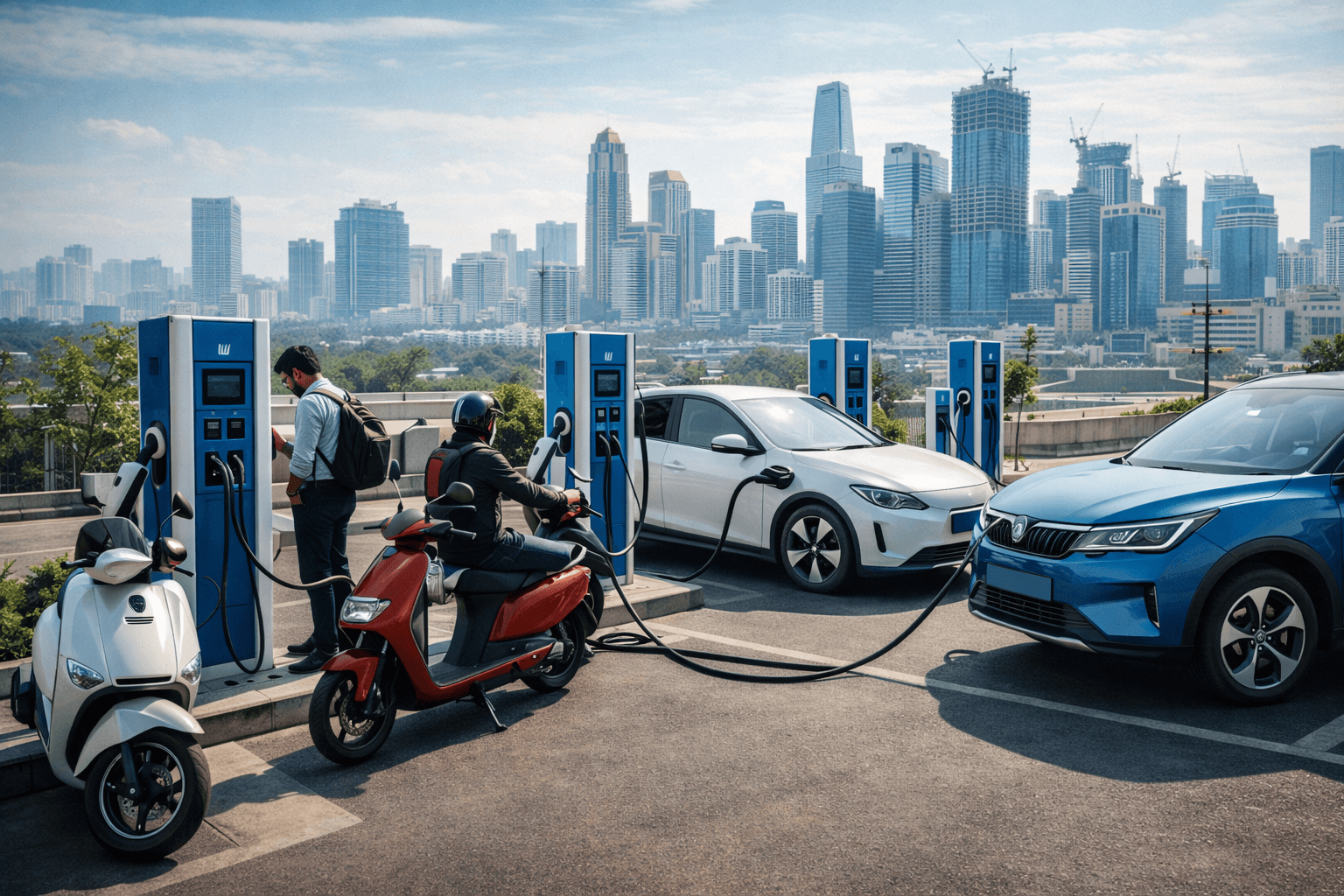
Electric vehicle sales in India are witnessing a sharp surge in 2025 as improved charging infrastructure, government incentives, and rising fuel costs accelerate the country’s transition toward clean and sustainable mobility.
Electric Vehicle Sales in India Cross a Turning Point
Electric vehicle sales in India have moved beyond early adoption and are now entering a phase of mass-market acceptance. Two-wheelers, three-wheelers, and passenger electric cars are all recording strong year-on-year growth, indicating broad-based consumer confidence.
Urban commuters, fleet operators, and delivery platforms are increasingly choosing electric vehicles due to lower running costs, reduced maintenance, and favorable policy support.
Two-Wheelers and Three-Wheelers Lead the Growth
Electric vehicle sales in India are currently dominated by electric two-wheelers and three-wheelers, which are well-suited for short-distance commuting and commercial use.
Key drivers include:
- Affordable pricing compared to earlier years
- Expanding city-level charging availability
- Lower total cost of ownership
Electric three-wheelers are also replacing traditional fuel-based autos in urban and semi-urban areas, contributing to cleaner air and lower noise pollution.
Passenger Electric Cars Gain Momentum
Electric vehicle sales in India in the passenger car segment are accelerating as manufacturers launch new models across price ranges. Improved battery range, better charging speeds, and enhanced safety features are addressing earlier consumer concerns.
Fleet operators, corporate buyers, and environmentally conscious consumers are driving demand, particularly in metropolitan regions where charging infrastructure is more developed.
Charging Infrastructure Expansion Plays a Key Role
Electric vehicle sales in India are closely linked to the rapid expansion of public and private charging infrastructure. Charging stations are being installed across highways, shopping complexes, office parks, and residential societies.
Government-supported initiatives and private investment are ensuring:
- Faster charger deployment
- Standardization of charging protocols
- Integration with renewable energy sources
This infrastructure push is reducing “range anxiety,” one of the biggest barriers to EV adoption.
Government Policies and Incentives Support Adoption
Electric vehicle sales in India continue to benefit from strong policy backing. Central and state governments are offering incentives such as purchase subsidies, tax benefits, and registration fee exemptions.
Organizations like the Ministry of Heavy Industries play a central role in shaping EV manufacturing and adoption frameworks, while state governments compete to attract EV-related investments.
Production-linked incentive schemes are also strengthening domestic manufacturing of batteries, motors, and power electronics.
Impact on Auto Industry and Employment
Electric vehicle sales in India are reshaping the broader automobile industry. Traditional automakers are accelerating EV investments, while new-age EV startups are entering the market with innovative designs and business models.
This transition is:
- Creating new jobs in battery manufacturing and software
- Reskilling workers in auto component industries
- Encouraging research and development in clean mobility
The EV ecosystem is emerging as a significant contributor to India’s industrial growth.
Challenges That Remain
Despite strong momentum, electric vehicle sales in India still face challenges such as:
- High upfront cost for some EV categories
- Uneven charging availability in rural areas
- Dependence on imported battery materials
Addressing these issues will be critical for sustaining long-term growth and achieving national electrification targets.
Outlook for Electric Vehicle Sales in India
Electric vehicle sales in India are expected to grow steadily over the next few years as technology improves, costs decline, and infrastructure coverage expands nationwide.
With policy continuity, private investment, and consumer awareness, India is well-positioned to become one of the world’s largest electric mobility markets.
Electric vehicle sales in India will further benefit from localized battery production, improved recycling systems, and wider rural charging access. As financing options expand and resale confidence improves, hesitant buyers are expected to convert. Industry analysts note that total cost parity with petrol vehicles could arrive sooner than projected due to policy stability and accelerating consumer awareness nationwide.
About The Author