Three Indian Sailors Killed as US Military Strikes Oil Tankers in Gulf of Oman
4 min read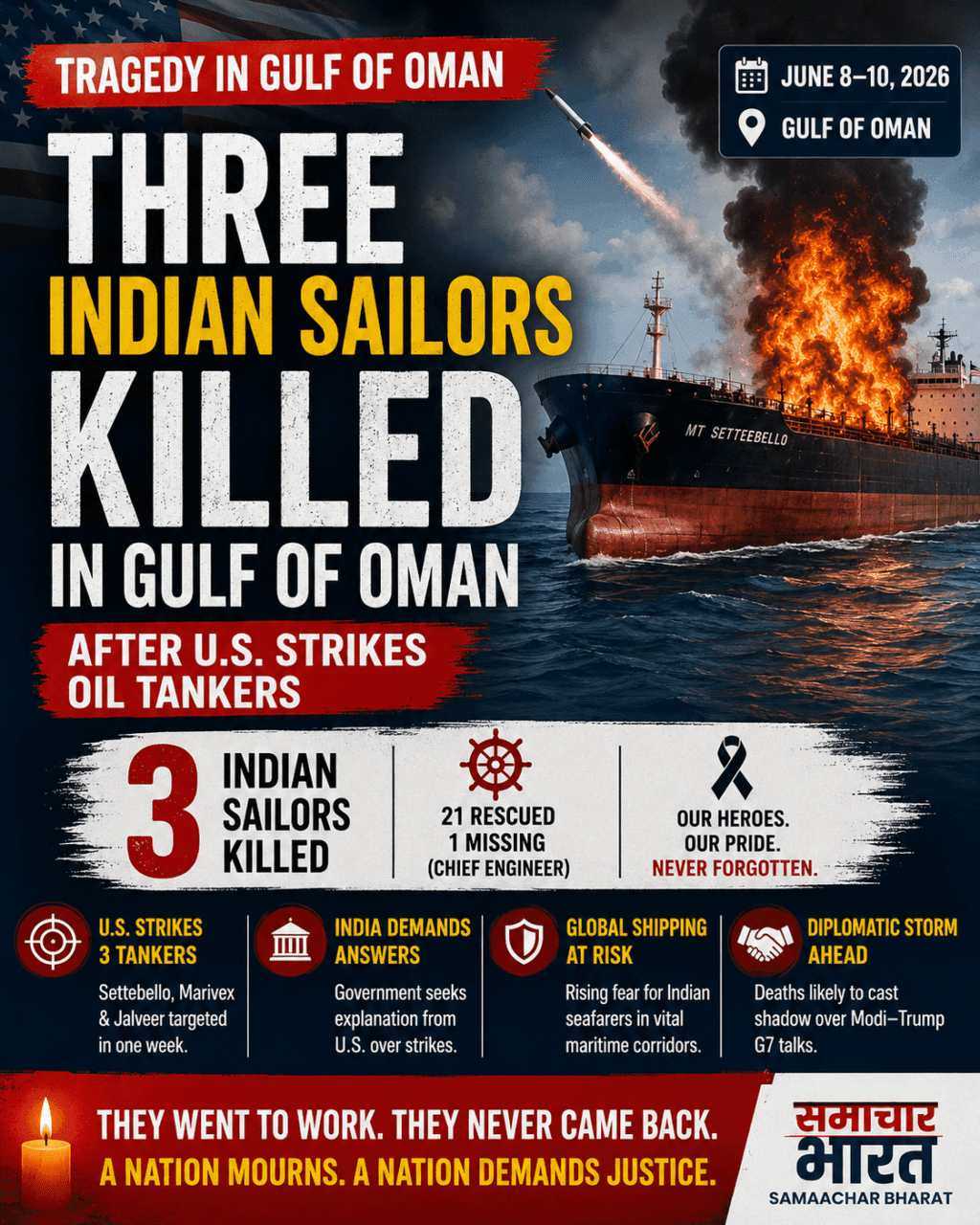
Three Indian sailors killed in the Gulf of Oman after the United States military struck multiple commercial oil tankers has become the most shocking and heartbreaking news story coming out of the Middle East this week. The attacks, carried out as part of Washington’s naval blockade against Iran, have triggered a formal diplomatic protest from New Delhi and raised urgent questions about the safety of Indian seafarers across the region.
Three Indian Sailors Killed in Gulf of Oman — What Exactly Happened
Between June 8 and June 10, 2026, American military forces targeted several commercial oil tankers sailing through the Gulf of Oman, accusing them of violating the US-imposed blockade designed to prevent Iranian oil from reaching global markets.
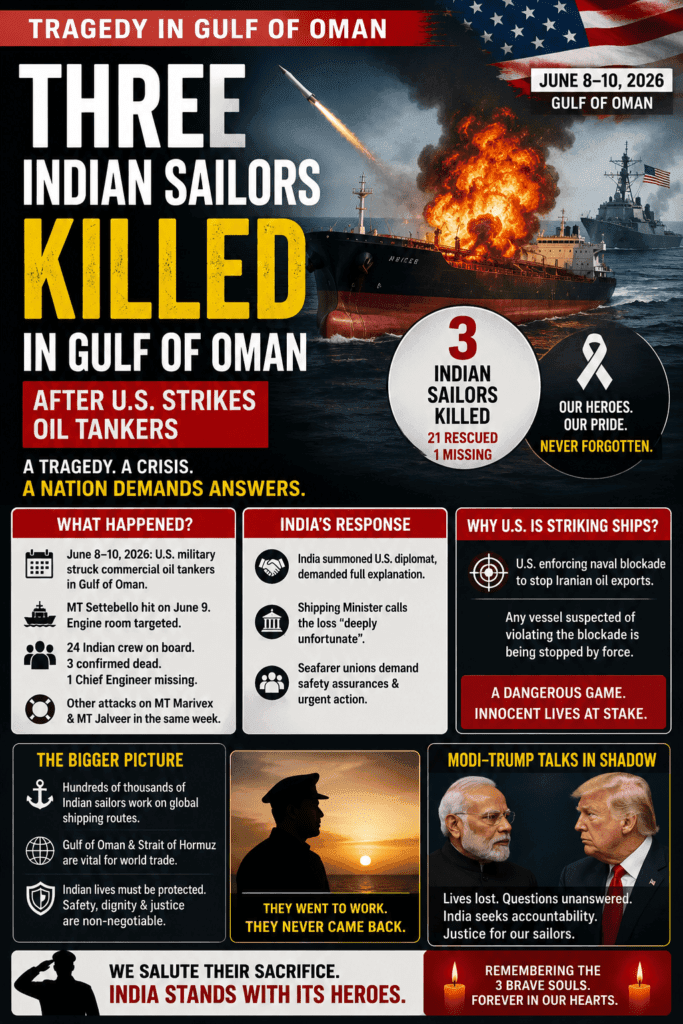
The Palau-flagged tanker MT Settebello, carrying 24 Indian crew members, was struck by US precision munitions fired directly into its engine room on the night of June 9. Of the 24 Indian sailors aboard, 21 were rescued. Three were confirmed dead after their bodies were located and formally identified. The ship’s Chief Engineer was also reported missing, adding further anguish to an already devastating situation.
Three Indian Sailors Killed in Gulf of Oman — This Was Not an Isolated Attack
The MT Settebello strike was only one of three attacks linked to American forces in the region within a single week. On June 8, the US military also targeted the Palau-flagged MT Marivex, another tanker with Indian crew members on board. Omani authorities swiftly airlifted 24 Indian sailors to safety following that attack.
A third vessel, the Guinea-Bissau flagged MT Jalveer, was involved in a separate maritime incident off the coast of Oman’s Shinas port, further intensifying concern among Indian shipping and seafarer communities. With three Indian sailors killed in Gulf of Oman waters and multiple vessels attacked in quick succession, the situation has escalated into a full diplomatic crisis between India and the United States.
India’s Diplomatic Response After Three Indian Sailors Killed in Gulf of Oman
The Indian government moved quickly and firmly. India’s Additional Secretary for the Americas summoned the US Chargé d’Affaires in New Delhi, demanding a full explanation over strikes on vessels carrying Indian nationals. India’s Shipping Minister issued an official statement calling the loss of Indian lives deeply unfortunate and confirmed that the three sailors initially reported missing from the MT Settebello had been declared officially dead.
The Forward Seamen’s Union of India also raised the alarm publicly, warning that contact with the vessel had not been fully restored and that the fate of the Chief Engineer remained uncertain even after the confirmed deaths were announced.
Why the US Is Striking Ships — The Iran Blockade Explained
To understand why three Indian sailors killed in Gulf of Oman has become an international flashpoint, one must look at the broader military strategy the United States is currently pursuing against Iran. Washington has imposed a strict naval blockade around Iran’s ports and the Strait of Hormuz, declaring that any commercial vessel found transporting Iranian oil will be stopped by force.
US Central Command confirmed that the MT Settebello was struck because it allegedly attempted to transport Iranian oil in violation of this blockade. The crew’s repeated failure to comply with instructions from American naval personnel was cited as the reason for the use of precision munitions. This blockade is a central component of Washington’s maximum pressure campaign against Tehran, which has dramatically intensified throughout 2026.
Three Indian Sailors Killed in Gulf of Oman — The Modi-Trump Dimension
The timing of these deaths carries enormous geopolitical weight. Prime Minister Narendra Modi is expected to hold bilateral talks with President Donald Trump on the sidelines of the upcoming G7 summit. The fact that three Indian sailors killed in Gulf of Oman waters died at the hands of American military forces now casts a long and uncomfortable shadow over that meeting.
India has historically maintained careful balancing act between Washington and Tehran, having been one of Iran’s largest oil buyers before US sanctions tightened. These attacks force New Delhi into an extremely sensitive diplomatic position — pushing back against its most important strategic partner over the deaths of its own citizens.
What Three Indian Sailors Killed in Gulf of Oman Means for India’s Seafaring Community
India is among the world’s largest suppliers of maritime crew, with hundreds of thousands of Indian sailors working aboard commercial vessels across international shipping lanes at any given time. The Gulf of Oman and the waters around the Strait of Hormuz are among the busiest and most economically vital corridors in global shipping.
The deliberate targeting of commercial vessels carrying Indian crew — regardless of the flag they sail under — raises grave and urgent questions about the safety of Indian seafarers in this region going forward. Industry bodies and unions are now demanding that the Indian government issue formal safety advisories and extract concrete diplomatic assurances from Washington immediately.
For the families of the three sailors who lost their lives, no statement from any government can bring their loved ones back. Three Indian sailors killed in Gulf of Oman is not just a headline — it is a tragedy that has left real families shattered, and a nation demanding accountability.
About The Author